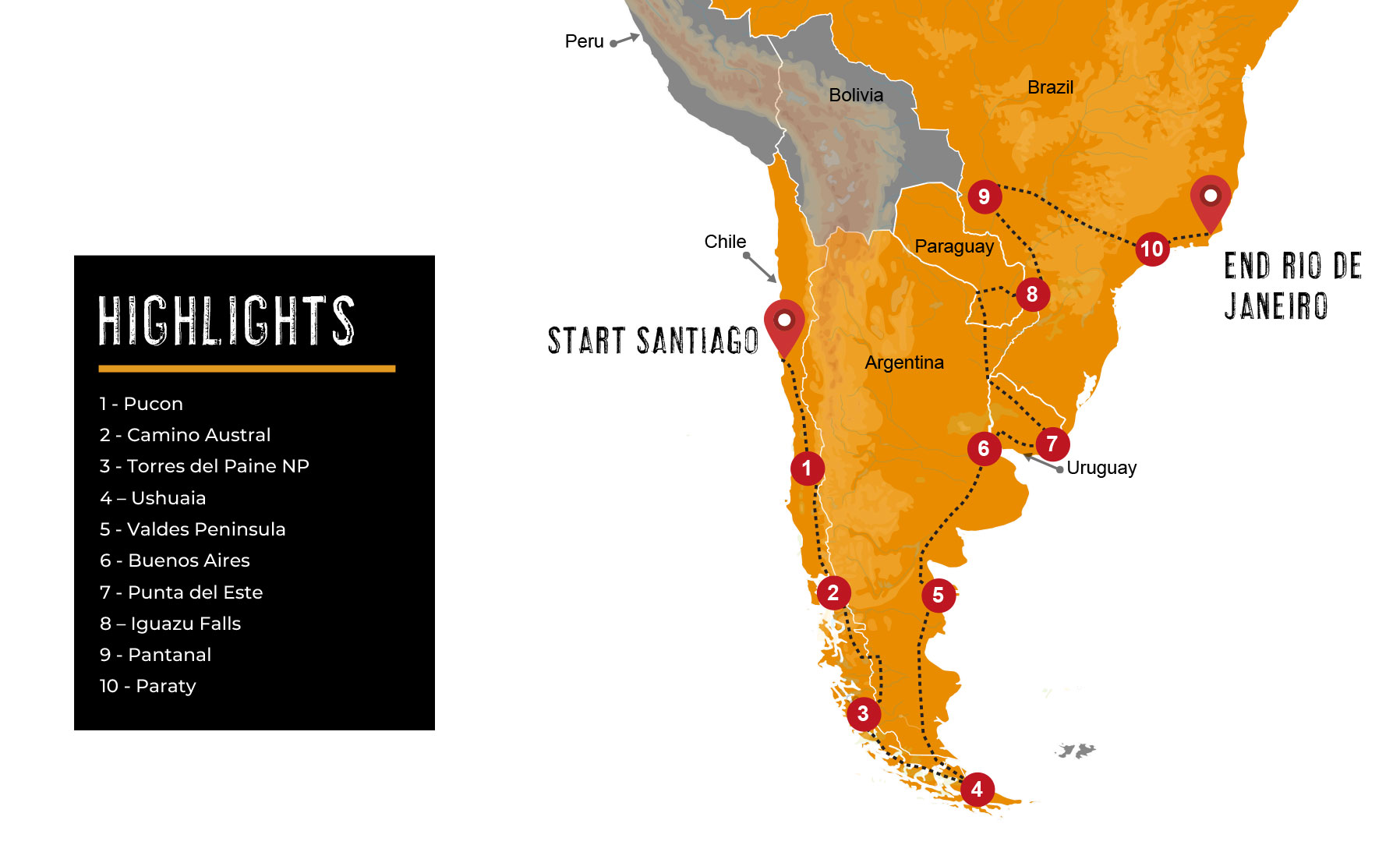
Santiago<- ->Rio de Janeiro (JSR)

Rio De Janeiro to Santiago 52 days, departing 06 Mar 2014

Ratings for this trip

Comfort Zone: Moderate

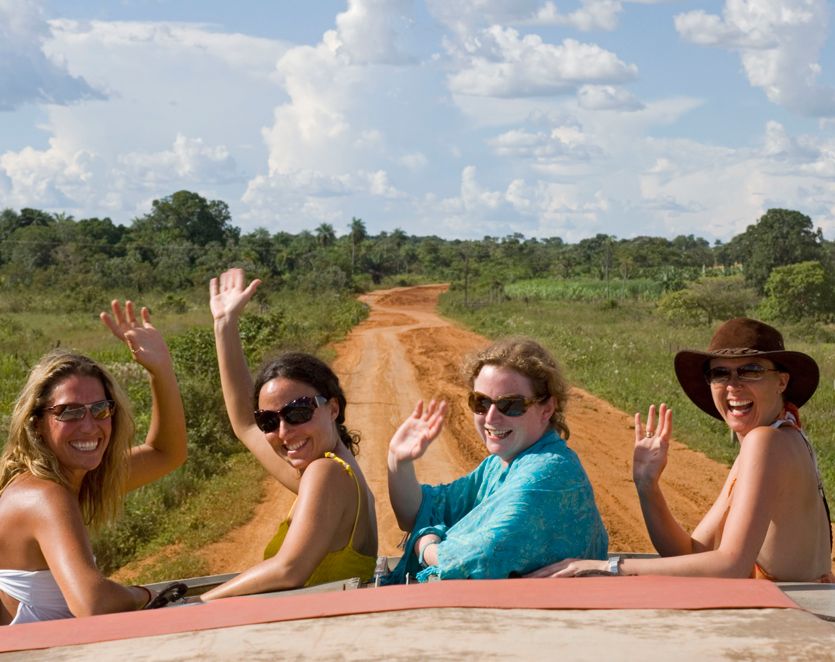
Moderate Comfort Level. These trips allow you to get off the beaten track with a few of your home comforts. On OVERLAND TRIPS expect there may be some wild camps, but with a predominance of campsites with good facilities (often with upgrades to rooms available) or staying in small hotels. Hotels will range from basic up to reasonably comfortable. Sharing will be on a 2, 3 or 4 person basis. On ADVENTURE HOLIDAYS we will have standard style accommodation, usually budget or tourist-class (2-3 star) accommodation with private facilities. Some accommodation may be on a multi-share basis. Transport will be a mixture of local and privately hired.

Physical Challenge: Moderate Fitness

MODERATE FITNESS: You will travel through areas that may be physically challenging. For example you may be at altitude some of the time. Depending on the trip, activities may include treks of 3-4 hours across hilly terrain, horse-riding and other adventurous activities. A moderate level of fitness is required.

Countries Visited

Argentina

Argentina is a vast country which has a staggering diversity of climates and landscapes. With vibrant cities, the pampas, jungles and wind swept Patagonia it is a country with a very special character all of its own. Its initial appearance is fairly western but this disguises a long history of its own cultural heritage.

Buneos Aires is the capital of Argentina, lying at the mouth of the River Plate, it is a real viberant city. Full of life, from great local restaurants to local street markets and dances, showing the amazing local tango dance, Buenos Aires is the heart and soul of Argentina. Also home to some exquisite wine bars and an amazing nightlife, Buneos Aires is a must see city if you visit Argentina.

On the pampas the Gaucho people of Argentina spend their days working, riding their horses and protecting their cattle. This has resulted in worldwide export for beef, sunflower oil and wheat, making the Argentina Pampas famous for agriculture.

Deep in the south of the country is Patagonia. This beautiful area is known for its breathtaking landscapes, magnificent lakes and beautiful glacial scenery. It is a great place for outdoor activities, such as, trekking, horse riding, kayaking and mountain biking.

Patagonia is also full of culture, with the Welsh language kept alive for generations, and although it is starting to die out, there are many Welsh communities in Patagonia, especially around the Chebut river.

Heading further south is Tierra del Fuego. Lying across from the Magellan Straights, "The Land of Fire" is mainly in Chile, but 30% of it, including Ushuaia, the most southerly city in the world, belongs to Argentina.

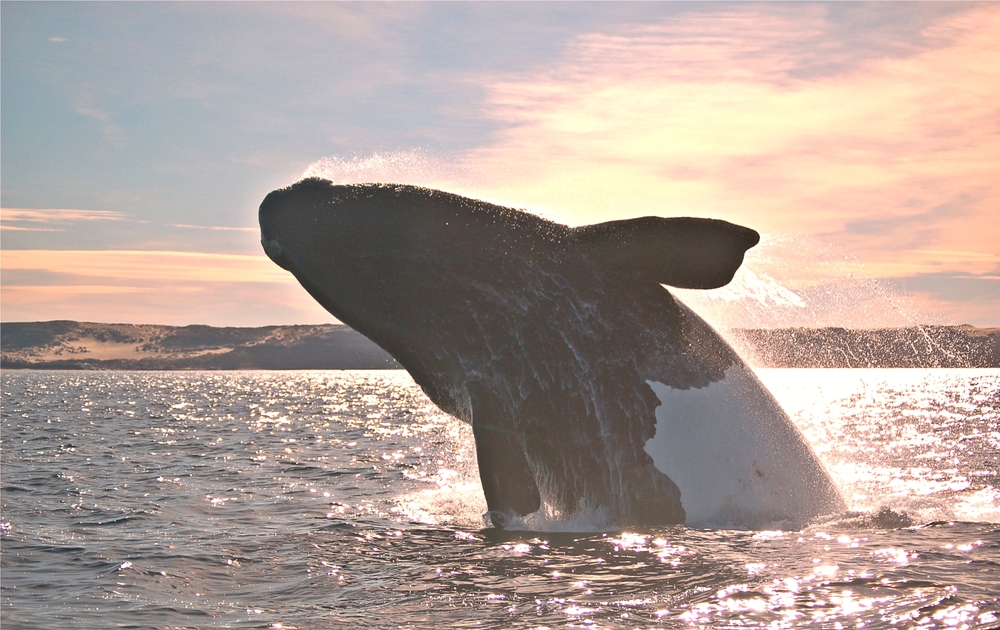
Argentina is also the home to some beautiful wildlife. The Valdez Peninsular, in the Atlantic ocean, is a protected area which is the habitat for whales, penguins and seals. At certain times of the year, there is a chance to see the killer whale. This is also the home for land animals such as the Patagonian fox, guanacos and hairy armadillos.

To the north of Argentina is the Esteros del Ibera reserve in an area of swampland. Near to the borders of Paraguay and Brazil, this is one of South America's most important wilderness areas and is also the place to spot the rare marsh deer, maned wolf, howler monkeys, capybara and over 350 different species of birds.

Brazil

Brazil has a totally different feel to it than the other Latin American countries. It positively vibrates, it is dynamic and the whole country has a unique energy. Its ethnic mix is very different from most South American countries with a predominance of Afro American people, especially in the Bahia coastal region. Brazil is a much underrated country in terms of tourism. Our trips explore much of the country, especially the little known regions and National Parks.

Most visitors start in Rio de Janeiro, Brazil's most famous city and home to the Christ the Redeemer statue. The deeper you travel into the country, the more the culture of Brazil is exposed. This is a chance to hear the soulful music which is influenced from Africa and Europe and brings the distinctive sounds of Samba, Choro, Brega and more, echoing throughout the land.

With the Amazon Rainforest covering large parts of Brazil, the natural environment is home to much wildlife and bio deversity. Eco safari in the rainforest and Pantanal are becoming popular elements of Brazilain tour

One of the many wonders is the language. Although Portuguese is the main language in Brazil, over 200 languages are spoken in the country, and the diversity of each reflects the diversity of the regions.

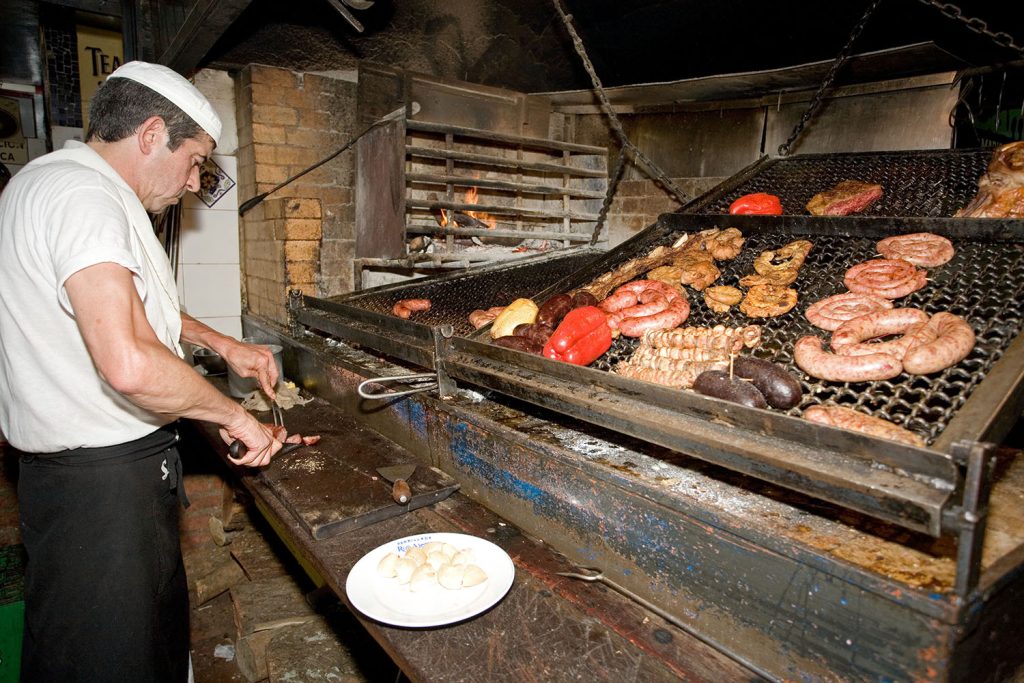
Brazil is also the place to taste  many unique foods. Inspired by others to cook, no matter what direction you head in the country, you are bound to find something new each time. To the south of Brazil is the taste of grilled meats that melt in your mouth, and to the north is the amazing Manicobo dish, that takes at least a week to prepare.

Chile

With some of the most diverse landscapes in the world, Chile has the beauty of it all. From  the driest deserts in the world, to the breathtaking sites of huge glaciers, this country is made for the outdoor enthusiast. Chile is a country full of volcanoes, lakes, rivers and beaches, and there is always an exciting adventure waiting to be found. If you venture off the beaten track, be prepared to make friends for life out of the welcoming locals.

A visit to Chile has to include a trip to the amazing capital of Santiago. This city stands at an amazing 1700 feet above sea level, and it is another place full of amazing landscapes and a gorgeous Mediterranean climate.

With so many locations to visit, the culture of Chile can be exposed through the sound of the music. Ranging from traditional folk music, to popular and classic sounds, the tradition of Chile is seeped into every area of the country.

Seafood is Chile's main cuisine and with so many dishes to try, it is an opportunity not to be passed upon. With 2700 miles of astounding coastline, Chile is the perfect location for the variety of dishes available.

So make friends with strangers, feel the vibe of Chilean music, and let Chile get into your pores.

Daily Itinerary

Day 1: Rio De Janeiro

Thu 06 Mar 2014

Today there will be a trip meeting at 18:00 hrs. There are no activities planned today and tonight we stay in a good quality hotel by the beach in Rio

Hotel for the night: Hotel Paysandu

Rua Paissandu, 37

Flamengo

Rio de Janeiro

Brazil

Tel +55 21 2558 7270

Activity Approximate Cost

Take a cable car up Sugarloaf mountain in Rio

USD

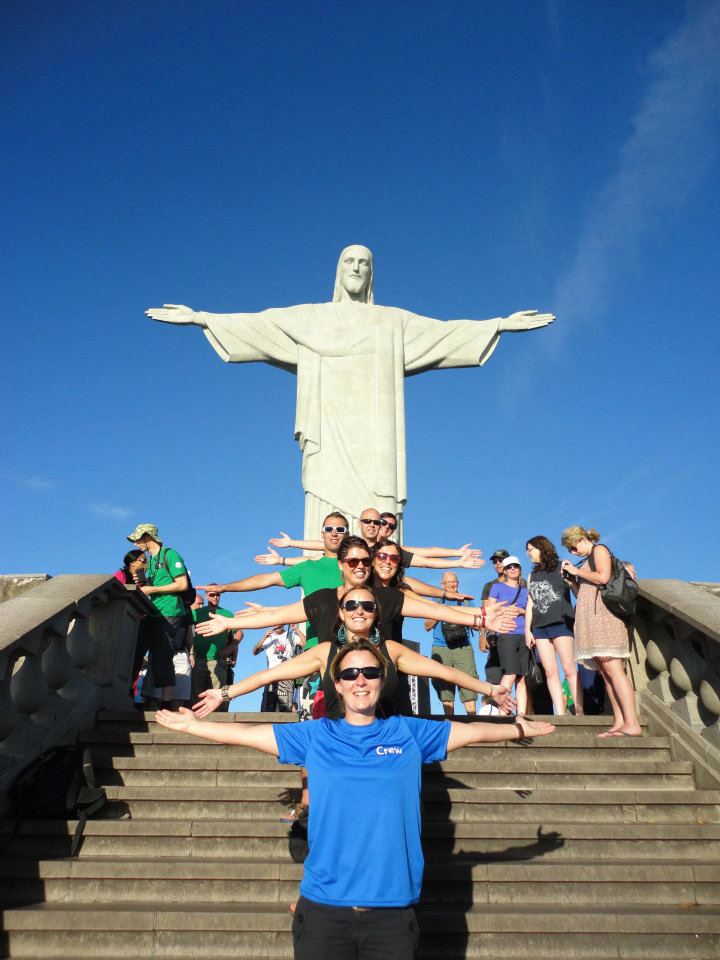
Visit the world famous statue Christ the Redeemer

Discover the vibrant city of Rio de Janeiro

Included in tour

Rio De Janeiro

Rio de Janeiro has to be one of the most beautifully situated cities in the world. Sugar Loaf Mountain rises up out of Guanabara Bay, the sandy beaches of Ipanema and Copacabana cut beautiful curves in the shoreline, all under the watchful gaze of Christ the Redeemer.

This is a city with something for everyone; beaches, history, shopping, culture, fantastic food and amazing nightlife. For amazing views of this spectacular city,  take the cable car up to the top of Sugar Loaf, or "Pao de Azucar" as the Brazilians call it, ride the train to Corcovado or jump on the tram to the historic hillside neighbourhood of Santa Teresa. If you're interested in learning more about Rio and Brazil, the Historical, Indian and National Museums are all well worth a visit, and even just wandering around the older parts of the city you'll be able to see some fantastic architecture. Kick back and relax on the beach, enjoy a beer or caipirinha at one of the many pavement cafes and then when evening comes you can party the night away - Rio has some unbelievable bars and clubs, Lapa is always a fun night out and Ipanema is always buzzing too. If you need a bit of quiet time to recover, take a walk in the Botanical gardens, or escape town for the day on an excursion to the lust forests of nearby Tijuca National Park.

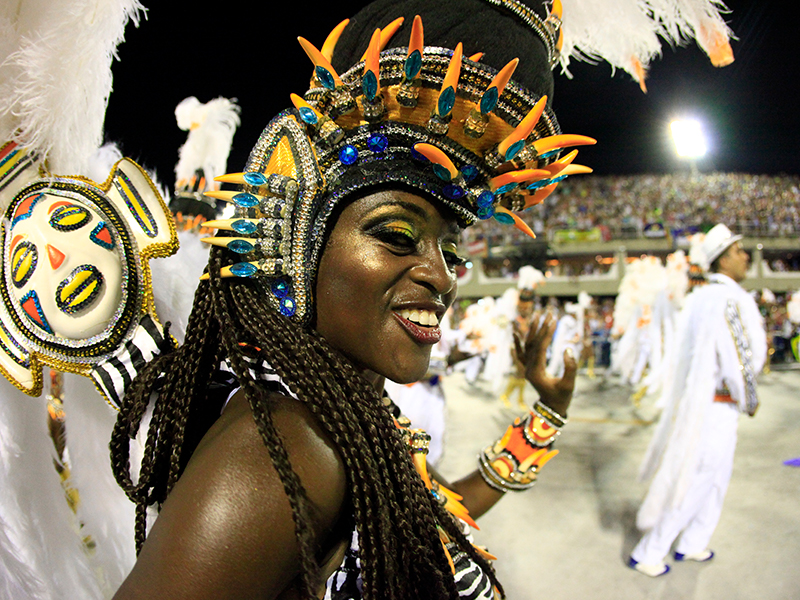
Of course Rio is particularly famous for it's huge annual party - Carnival. The celebration of Mardi Gras 6 weeks before Easter is a great Brazilian tradition - the whole city goes wild for a full 7 days in a whirlwind of music and colour. Samba schools compete with ever more awe-inspiring dance displays and costumes putting on marathon perfomances in the Sambadrome, street parties are held all over the city and friends and families take to the beach.

Day 2 to 4: Parati

Fri 07 Mar to Sun 09 Mar 2014

We drive 235 kms along the Emerald Coast to Parati where we spend 3 nights at a beachside hostel. Free time to explore, including boat trip out to a small island to go snorkelling or diving

Activity Approximate Cost

3 days on Brazil's Emerald Coast

Included in tour

Horseriding or mountain biking around Parati

USD 15

Boat Trip Out To Islands And Beaches

Included in tour

Parati

The Emerald Coast, or the "Costa Verde" as it is known in Brazil, stretches south from the city of Rio de Janeiro, a thin strip of land sandwhiched between verdant green mountains and the sparkling waters of the Atlantic. Picture-book islands, deserted beaches and picturesque coves with excellent swimming and diving make it the perfect place to relax and enjoy a couple of days of R & R. Dotted along the coastline itself are lots of small towns and villages, not to mention the hundreds of tiny islands, best explored on a lazy boat-trip.

The old Portuguese colonial town of Parati is perhaps the most attractive spot on the coast. Low white-washed buildings with colourful doors and shutters crowd around the cobbled streets and plaza, full of interesting shops, bars and restaurants. Parati really comes alive at night, when locals and tourists alike sit outside the many street cafes and congregate in the main square. The town also has a couple of beaches and there are plenty of others in the surrounding area - and this is also a good place for diving and snorkelling trips, which can be arranged locally.


Day 5: Brotas

Mon 10 Mar 2014

Today we drive 560 kms drive to the remote town of Brotas in southeast Brazil. The afternoon is free for adventure activities and we stay in a campsite with facilities

Brotas

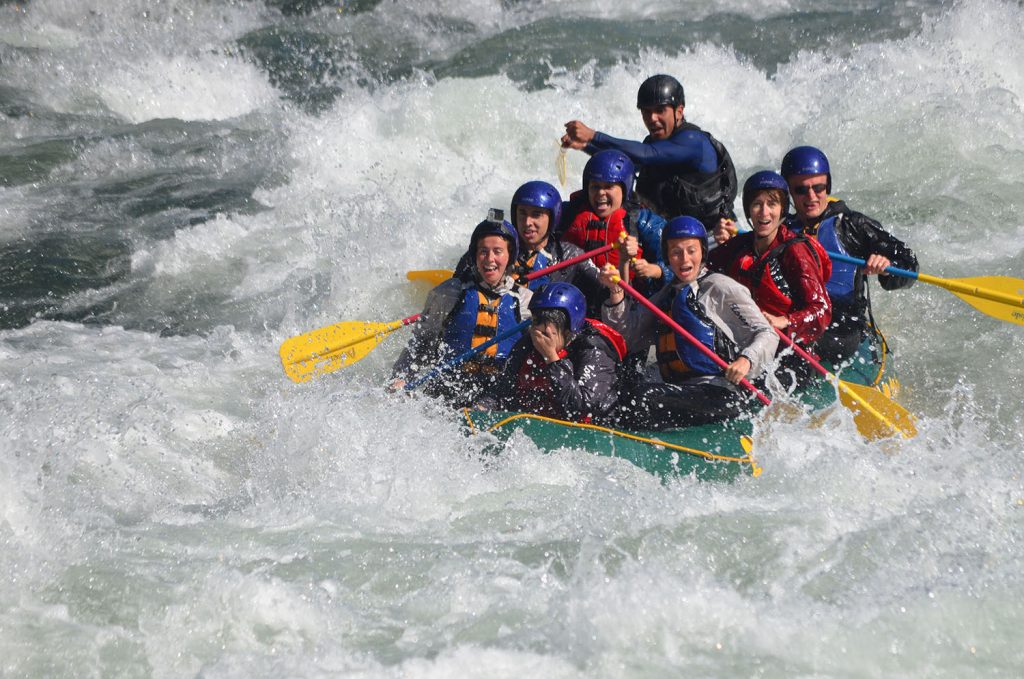
Located in southeast Brazil, in the state of Sao Paulo, the remoteness of Brotas has meant that the forests surrounding this isolated town are teeming with species crucial to the maintenance of global biodiversity. The perfect location in which to experience untouched natural environments, Brotas has subsequently become an important destination in Brazilian eco-tourism. Alongside those visiting to enjoy the remarkable fauna that inhabit this area, Brotas is gradually acquiring a reputation for the quality of the adventure activities that are on offer. From horse riding and canyoning, to rafting and kayaking, Brotas is synonymous with the spirit of adventure that characterises any Dragoman Overland trip.

Day 6: Brotas

Tue 11 Mar 2014

Non driving day, free for adventure activities such as white water rafting.

Activity Approximate Cost

Time for optional adventure activities at Brotas

USD

Day 7: Campo Grande

Wed 12 Mar 2014

We overland 650 kms towards Bonito, our base for the Pantanal trip where we bush camp for the night

Day 8 to 10: Southern Pantanal

Thu 13 Mar to Sat 15 Mar 2014

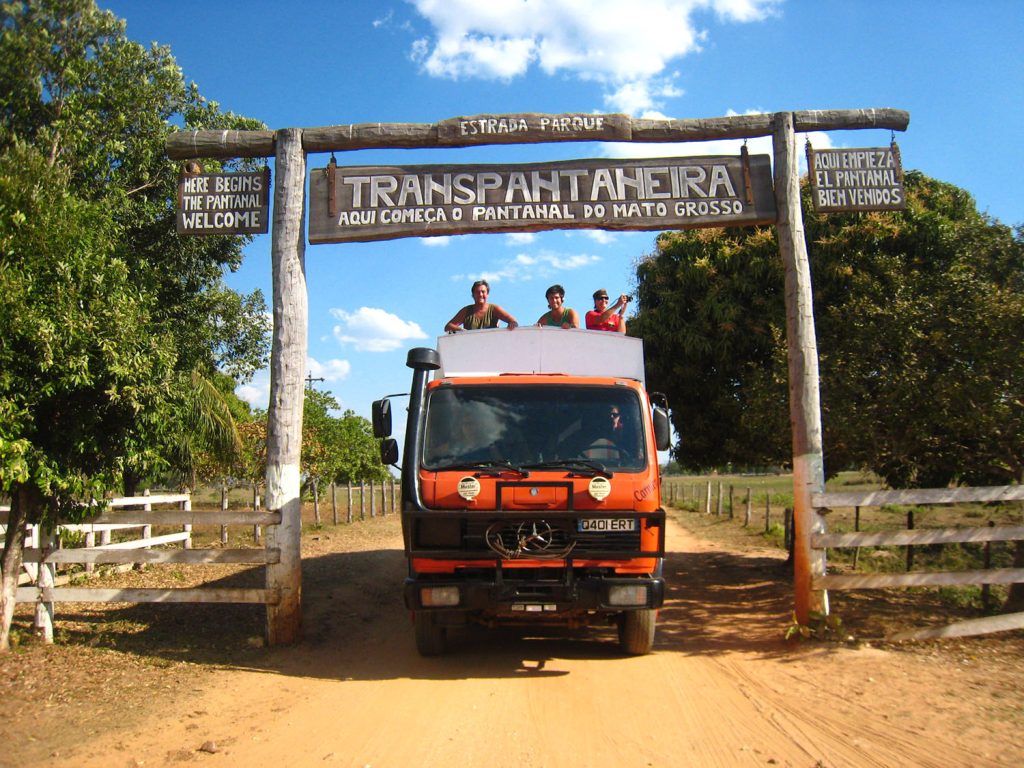
Following a 4 hour drive from near Campo Grande we spend 3 days in Brazil's amazing Southern Pantanal. From a ranch base we explore the surrounding area on horseback, from boats and canoes, from farm trucks and on foot staying in shared accommodation. The last night is spent at a campsite in Bonito.

Activity Approximate Cost

2 night wildlife safari into the Pantanal

Included in tour

Southern Pantanal

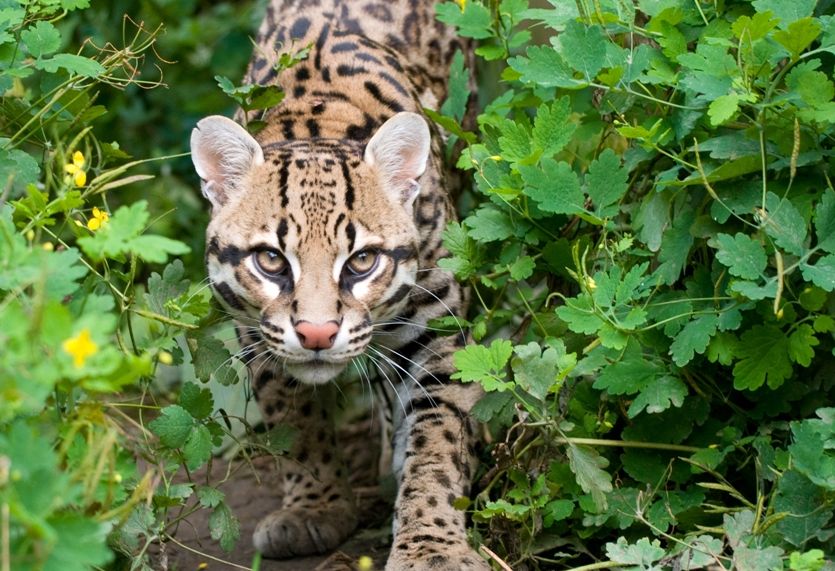
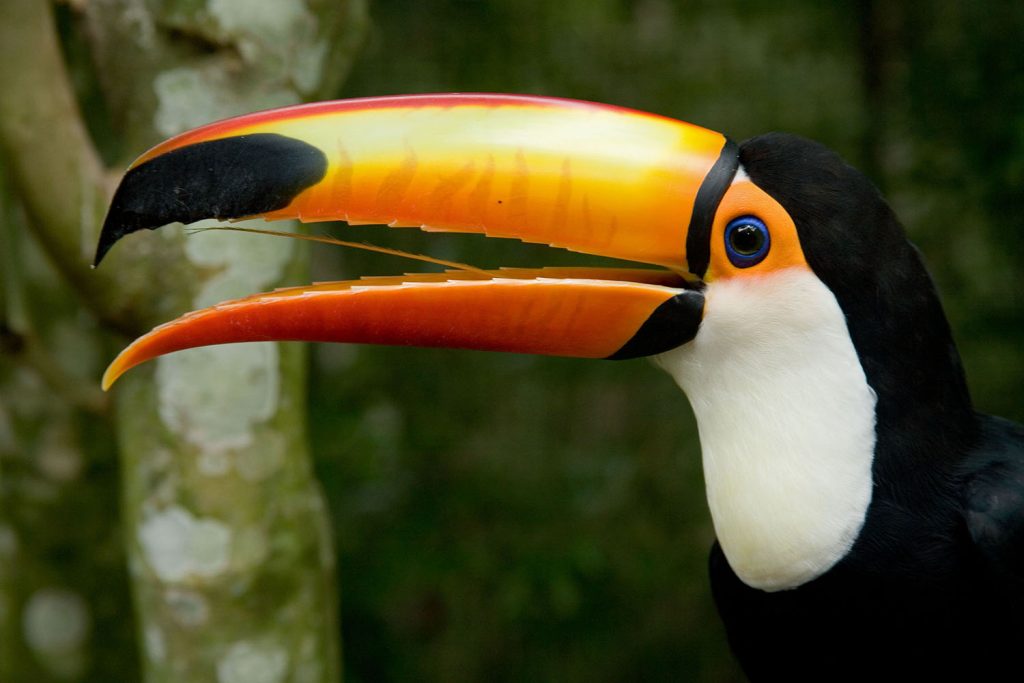
The Pantanal is a vast wetland that covers much of inland central and southern Brazil, teeming with birds and wildlife from toucan to caiman, capybara, ocelot and even Jaguar. Originally this was a predominantly agricultural area, dotted with cattle ranches known locally as "Fazenda". Today the cattle ranchers live side by side with the anaconda and Jaguar, having realised the importance of their home as a unique habitat for wildlife, with many of the Fazendas opening up for eco-tourism and offering safaris and tours of the area.

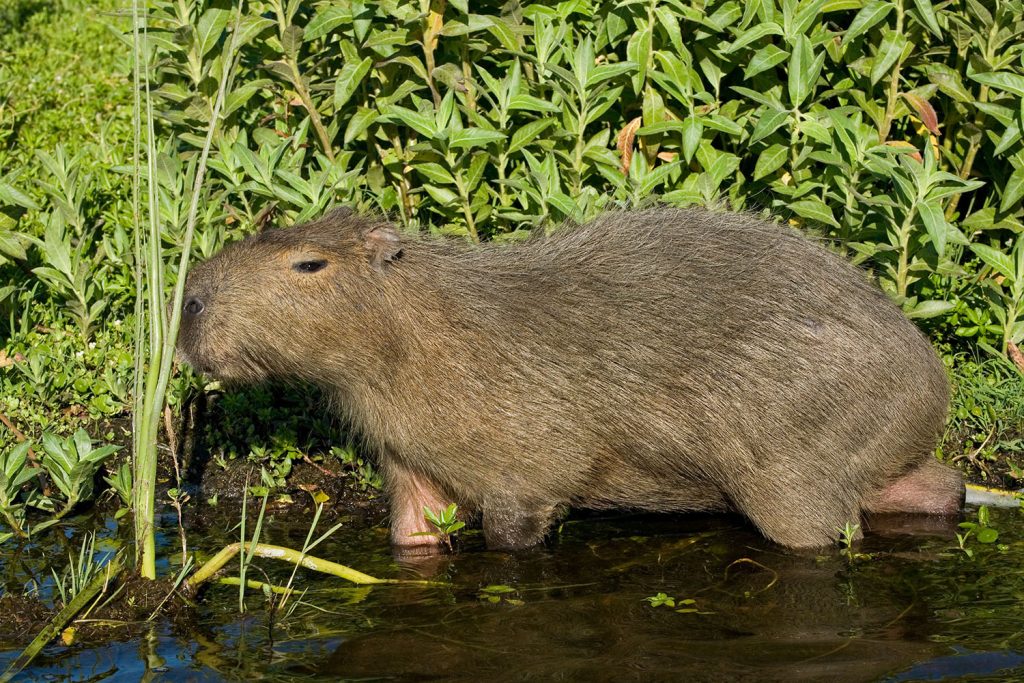
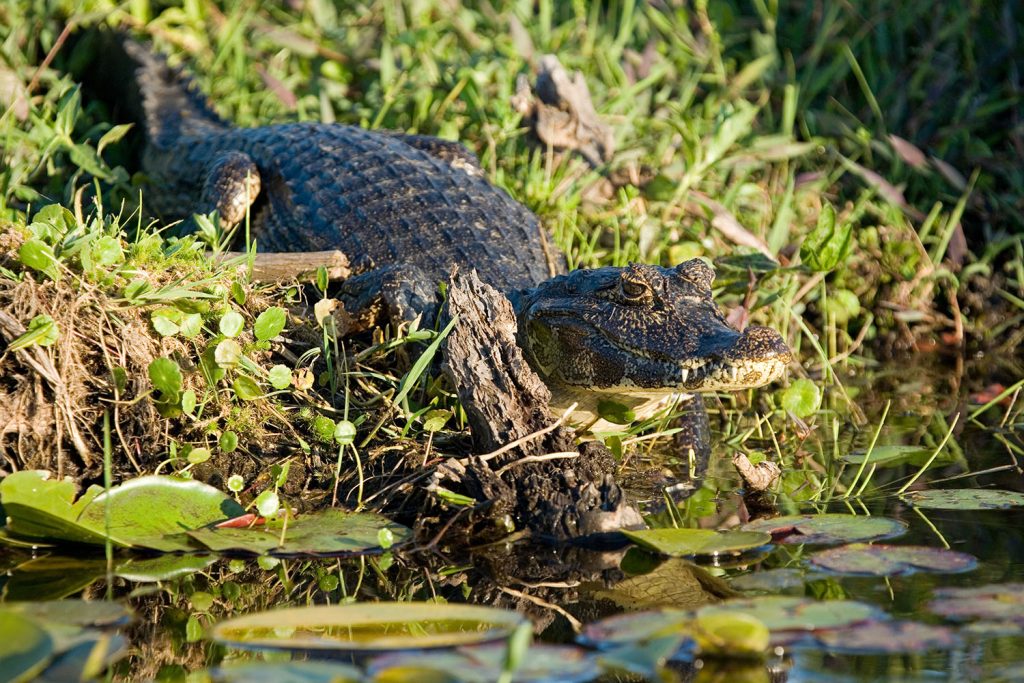
The wildlife here is staggering and there is probably no-where else in South America where you'd be able to see as many indigenous species. Over 250 different birds have been recorded here, including parakeets, macaws, kingfishers, ibis, storks, kites and hawks, hummingbirds and more - and there are also prolific numbers of jacare, anacondas, iguanas, two species of anteaters, ocelot, jaguars, cougars, giant river otters and thousands of pamba and march deer. One of the easier animals to spot is the capybara, a giant guinea pig type rodent that grows up to 60 kg. and lives in large herds in the swamps.

Day 11 to 12: Bonito

Sun 16 Mar to Mon 17 Mar 2014

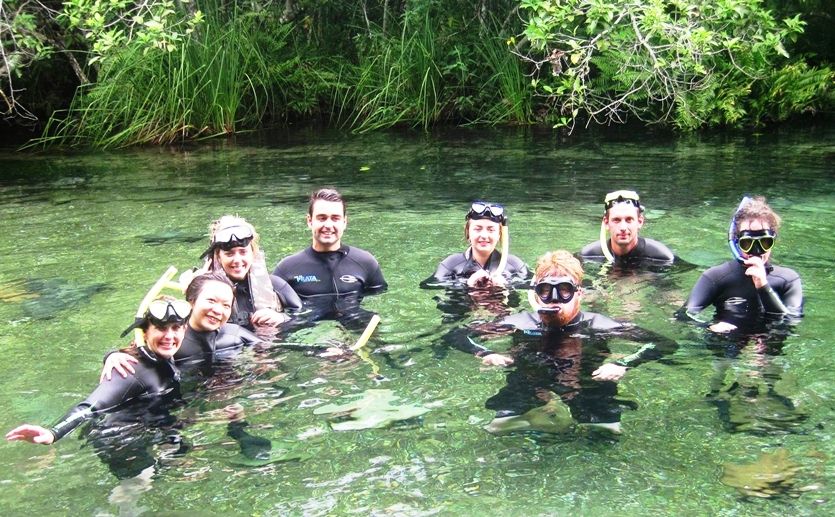
These are non-driving days where you have free time to enjoy the range of activities available in Bonito such as snorkeling, rafting or a jungle trek. 

Activity Approximate Cost

Caving, rafting and snorkeling in the waters of Bonito

USD 80

2 full days to enjoy Bonito, Brazil's ecotourism capital

Included in tour

Bonito

The area around the small town of Bonito really is unique. It’s main attractions are its crystal clear rivers, springs and caves, not to mention the abundant wildlif, which includes monkeys, alligators, anaconda, over 30 varieties of fish and tremendous birdlife. Unsurprisingly, the town is often described as the "eco-tourism capital of Brazil".

There are endless activities on offer, from spectacular walks through the surrounding hills and forest, to caving, horse-riding, abseiling, and snorkeling. Many of the best attractions are on private land and the area is being very carefully managed in order as to protect the wildlife and habitats found here.

Day 13: Foz Do Iguacu

Tue 18 Mar 2014

Full day 800 kms drive to Foz de Iguazu where we stay at an excellent camp site with facilities and a pool

Activity Approximate Cost

2 full days to discover the unbelievable Iguazu Falls

Included in tour

Foz Do Iguacu

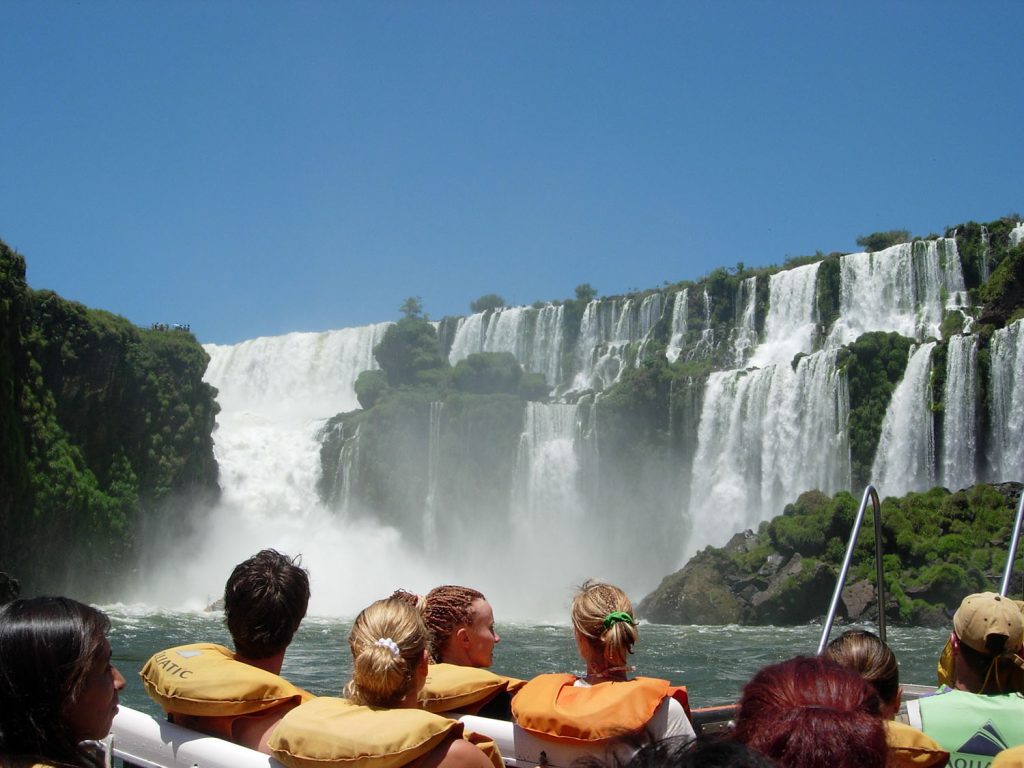
Foz do Iguacu is named after the impressive waterfalls located close to the town forming the border with nearby Argentina and Paraguay. Foz is on the Brazilian side and is much larger than nearby Puerto Iguazu. Visiting the Iguacu falls is a must from here, even though you can visit the Argentinian side as well. The Brazilian park features a number of cleverly constructed walkways that allow you to get right out over the water up close to the falls themselves - and you will often be able to see fantastic rainbows forming as the sun catches the spray. If you want the ultimate waterfall experience, you can also organise helicopter flights here, where you'll be taken out right over the horseshoe of the falls, giving you a spectacular view of this natural wonder from a totally different perspective.

As well as the magnificent waterfalls, there's also a great bird park in Foz, where you can see many of Brazil's native species, including Toucans and Macaws. You can also visit the incredible Itaipu Dam, a vast concrete edifice that spans the Rio Parana and has been described as one of the 7 wonders of the modern world.

Day 14: Foz Do Iguacu

Wed 19 Mar 2014

Non-driving day. Free time to enjoy the famous Iguazu Falls from the Brazilian side, with a range of activities available. Second night at campsite

Activity Approximate Cost

Boat trips, forest hikes and helicopter over Iguazu Falls

USD 70

Day 15: Puerto Iguazu

Thu 20 Mar 2014

60 kms drive across the border to see Iguazu Falls, from the Argentinean side. We stay at Puerto Iguassu at a campsite with good facilities

Puerto Iguazu

Puerto Iguazu is in Argentina, but its right on the border with neighbouring Brazil and Paraguay. This otherwise small, sleepy town has one main attraction, the famous Iguazu Waterfalls. The falls are best seen from both the Argentinian and Brazilian sides, as the perspective you get it is totally different from different sides of the border. On the Argentinian side you can easily spend a whole day exploring, as there are plenty of footpaths to follow in and around the park that protects the area around the waterfalls. From this side of the falls you can also take a jet-boat trip along the river under the falls, experiencing the full, life-afirming force of all that fantastic cascading water.

Day 16: San Ignacio De Mini

Fri 21 Mar 2014

We drive 270 kms drive to the Jesuit Mission of San Ignacio de Mini. Overnighting in a campsite with good facilities. 

Activity Approximate Cost

Visit the Jesuit ruins at San Ignacio de Mini

Included in tour

San Ignacio De Mini

Misiones province is so called because of the many Jesuit missionaries who arrived here in the 17th century, setting up "Reductions", or missions, throughout this area of Argentina, as well as parts of neighbouring Paraguay and Brazil. The small town of San Ignacio de Mini was once the centre of one such mission, and it's ruins  can still be seen today. The buildings are very well preserved and include a church, cemetery and monastery and provide an interesting insight to the history of this area.

 

Day 17: Buenos Aires

Sat 22 Mar 2014

Full day 560 kms drive towards Buenos Aires. We bush camp for the night

Buenos Aires

At the mouth of the River Plate lies Buenos Aires, the cosmopolitan capital of Argentina. It's a buzzing, energetic city that often feels more European than Latin American, so much so that it's often referred to as "the Paris of the South". Not surprising when you consider how much the city has been influenced by immigration, with it's large Italian and Spanish communities.

There is a huge amount to do see and do here and a good place to start is with a city tour, which will help you get your bearings and see all the main sights. You can take in a lot on foot, as the wide streets are very pedestrian friendly and the underground metro system is cheap and easy to navigate. The neighbourhoods of San Telmo, Recoleta and Palermo are certainly all worth exploring, San Telmo for it's olde worlde charm, antique shops and Sunday street market, Palermo for it's unique quirky shops and restaurants and Recoleta is the "Mayfair" of Buenos Aires and home to the La Recoleta cemetry, Eva "Evita" Peron's final resting place. The waterfront area known as La Boca is also worth a look, this slightly down-at-heel neighbourhood is Buenos Aires' most colourful barrio, the ramshackle buildings painted in a rainbow of different bright colours.

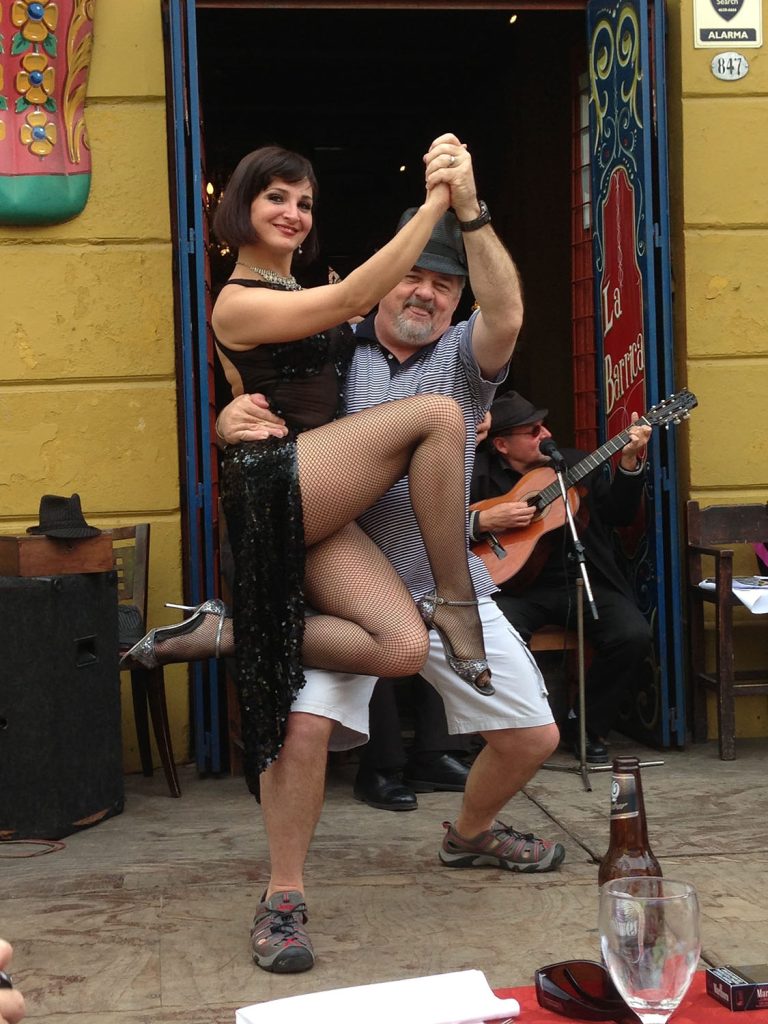
In the evenings, you are also spoilt for choice. Buenos Aires has a vibrant nightlife, with a huge number of bars and night clubs to choose from. Restaurants here vary from cheap and cheerful to world class and it's a great place to get stuck into some of Argentina's finest steak and red wine. Of course this is also the home of Tango, and there are many evening Tango shows you can buy tickets for, or if you want a more "real" Tango experience you can check the local papers for details of where tango "milongas" are being held. This is where the locals go to tango, with dances held in school halls, meeting rooms and even warehouses. You might also like to visit the Teatro Colon, one of the world's greatest opera houses - even if you don't go to watch a show, it's usually possible to take a guided tour of the building during the day.

Everywhere you go you'll be surrounded by some fantastic architecture. The Plaza de Mayo is perhaps the most historically interesting - as this is the ste of the Cabillo (original town hall), Casa Rosada (the Presidential Palace) and the cathedral where the body of General San Martin lies. Finally, if you get the chance, try and get hold of tickets for an Argentinean football match while you're here, even if you're not usually a sports fan, the electric atmosphere of a local match is definitely something you'll never forget - tickets are usually available from local tourist agencies - and if you've still got time to spare, why not take the hydrofoil across the water to Uruguay for a day.

Day 18: Buenos Aires

Sun 23 Mar 2014

We set off early morning to drive 415 kms into the capital, Buenos Aires arriving late in the afternoon. We stay in a comfortable hotel with good facilities. There are various optional activities to enjoy.

Activity Approximate Cost

Explore cosmopolitan Buenos Aires, the coolest city in South America

Included in tour

Practice your dance steps in the birthplace of Tango

USD

Head over to Montevideo, Uruguay's capital, for the day

USD 140

Watch a football game at La Bombonera

USD 40

Enjoy a free city tour of Buenos Aires

USD

Day 19 to 20: Buenos Aires

Mon 24 Mar to Tue 25 Mar 2014

Border information: If you are starting in Buenos Aires, enter Argentina at Buenos Aires Airport.

Free time to enjoy the wonderful city of Buenos Aires where there is lots to see and do. Today there will be a group meeting at 18:00 hrs. We will be staying in a good quality hotel in the city.

Hotel for the night: Hotel Splendid

Hotel Splendid

Avenida Rivadavia 950

Buenos Aires

Argentina

+54 11 4345 2800

Activity Approximate Cost

Enjoy a free city tour of Buenos Aires

USD

Head over to Montevideo, Uruguay's capital, for the day

USD 140

Explore cosmopolitan Buenos Aires, the coolest city in South America

Day 21: Monte Hermoso

Wed 26 Mar 2014

We head of BA and drive almost 700 kms across the pampas. Tonight we will bush camp along the coast somewhere near Monte Hermoso. 

Day 22: Puerto Madryn

Thu 27 Mar 2014

Full day 750kms drive to Puerto Madryn where we stay at a camp site with facilities

Activity Approximate Cost

Guided visit to Valdez Peninsula to meet the elephant seals and sealions

Included in tour

Whale watching off Puerto Madryn (seasonal)

USD 45

Puerto Madryn

Puerto Madryn is a port town on the atlantic coast of Argentina, gateway to the Valdez Peninsula, known for its wildlife. The town is also popular with locals as a beach destination and it can become quite busy in summer months with Argentinian holiday-makers. The original settlers here were Welsh, founding the port and colonising the Chubut River valley. Some of the smaller communities are still fiercely Welsh, retaining many of the original immigrants traditions and customs, and in places like Gaiman you can even go for a Welsh afternoon tea in one of the local tea houses. Whilst the Welsh language was kept alive for over four generations, it is now gradually dying out, although the area still offers an interesting insight into the lives of the people who landed here during the latter part of the last century.

Day 23: Valdez Peninsular

Fri 28 Mar 2014

Guided day trip to Valdez Peninsula to see its abundant marine life. Optional boat trip to see whales and dolphins if time allows. Second night in campsite with facilities

Valdez Peninsular

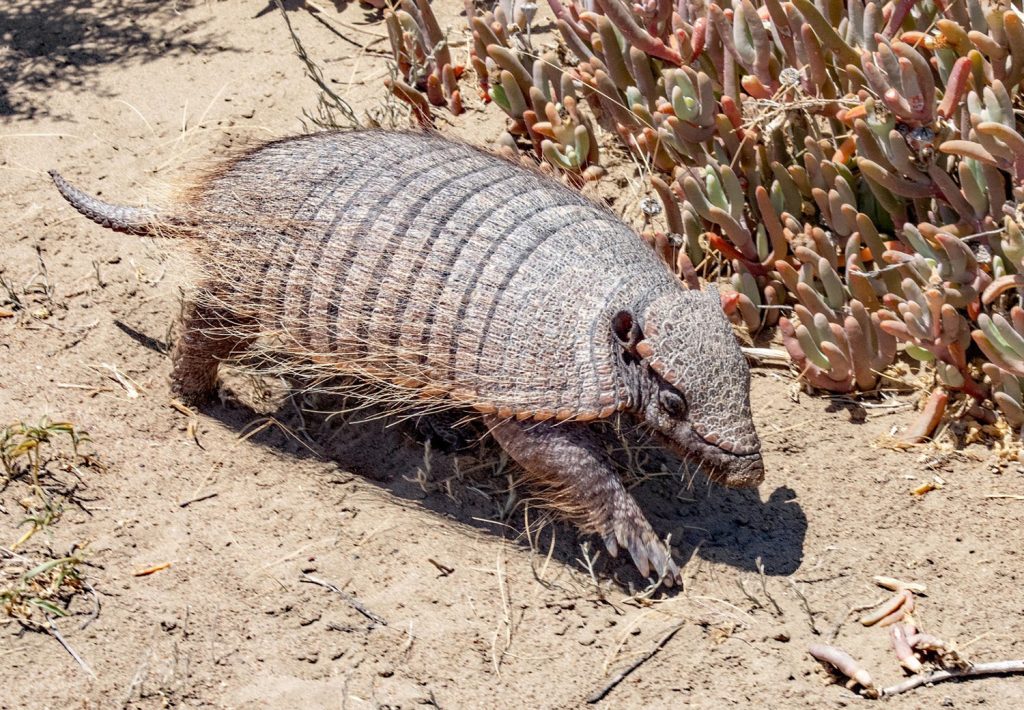
The Valdez Peninsular juts out into the Atlantic close to the Argentinian town of Puerto Madryn, at the northern edges of Patagonia. The area is protected as a wildlife sanctuary as it provides an important habitat for whales, penguins, seals and sealions as well as a lot of land animals such as Patagonian foxes, guanacos and hairy armadillos. Exploring the peninsular there are various spots where the various different animals can be seen. You can also take a  boat trip that will get you even closer to some of these magnificent aquatic mammals, often the dolphins and whales you will see will only be a few feet away.

Day 24: Camarones

Sat 29 Mar 2014

370 kms drive to Camarones. We will stay at a camp site with facilities

Activity Approximate Cost

Visit the penguin colony at Camarones

Included in tour

Camarones

Bahía Camarones and Cabo Dos Bahías are both important nesting sites for large colonies of Magellanic penguins, Camarones alone is home to around 25,000. Between September and April, the penguins come to these sites to incubate their eggs and prepare their offspring for migration. Each couple stand in front of their nests, protecting the eggs from birds and other predators, and occasionally one adult goes to the sea for food.

Day 25 to 26: El Calafate

Sun 30 Mar to Mon 31 Mar 2014

Overlanding over 1500 km through spectacular scenery following the Atlantic Coast, wildcamping along the way until we reach El Calafate. There's lost to see and do as we go such as a visit to Cabo dos Bahias Magellan Penguin Colony.

El Calafate

El Calafate is a small town on the southern shore of Lago Argentino in Patagonia. Originally a sheep station and trading outpost, today the town has developed a bustling small town atmosphere thanks to a growing tourist trade. Most people base themselves here whilst visiting the nearby Perito Moreno Glacier, located a short distance away at the southern reaches of the Parque Nacional Los Glaciares. Interestingly the town takes its name from the Calafate berry, and locals claim that if you eat one of these and make a wish, you are guaranteed to return to Patagonia.

Day 27: El Calafate, Perito Moreno Glacier

Tue 01 Apr 2014

Today is a non-driving day with a guided visit to view the stunning Moreno Glacier. Second night at hostel

Activity Approximate Cost

Guided full day trip to Moreno Glacier

Included in tour

Perito Moreno Glacier

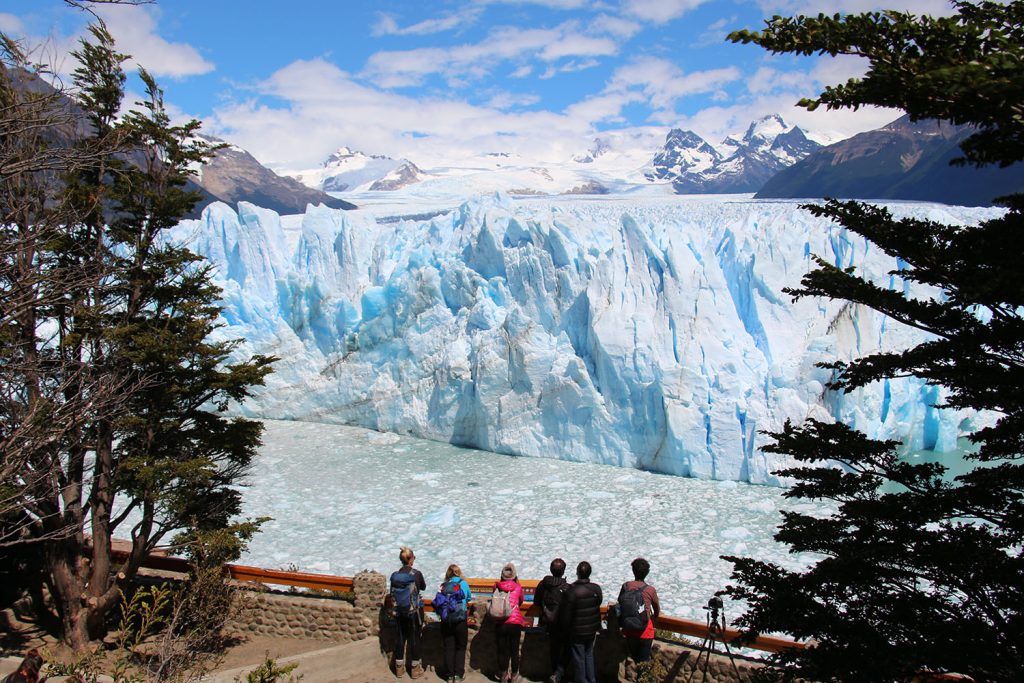
If Patagonia is synonymous with jaw-droppingly beautiful mountain scenery, then the Perito Moreno Glacier certainly doesn't disappoint. This incredible glacier is the highlight of the southern region of Argentina's Los Glaciares National Park, a spectacular wall of ice over 60m tall above the water and 5km wide. One of only three Patagonian glaciers that are not retreating, you can stand on one of the many catwalks and marvel at the glacier, listening to it creak and watching as enormous chunks crash into the water. It's also possible to take a short boat trip out onto the lake in order to get up even closer to the face of the glacier itself.

Day 28: Torres Del Paine National Park

Wed 02 Apr 2014

400 kms drive into Chile to Torres del Paine National Park via Puerto Natales. We stay at a camp site with facilities.

Border information: Exit Argentina at Rio Don Guillermo, enter Chile at Cerro Castillo.

Activity Approximate Cost

4 days to explore and trek the rugged Torres del Paine National Park

Included in tour

Zodiac boat trips, horse rides and trekking in Torres del Paine National Park

USD 40

Complete the W Walk with this 2 days fully inclusive add on. This is a fully inclusive package. Includes your accomodation (in bunk beds in the refugios - you will need your sleeping bag), food for the duration of the trek and the service of an expert English speaking local guide.

USD 571

Torres Del Paine National Park

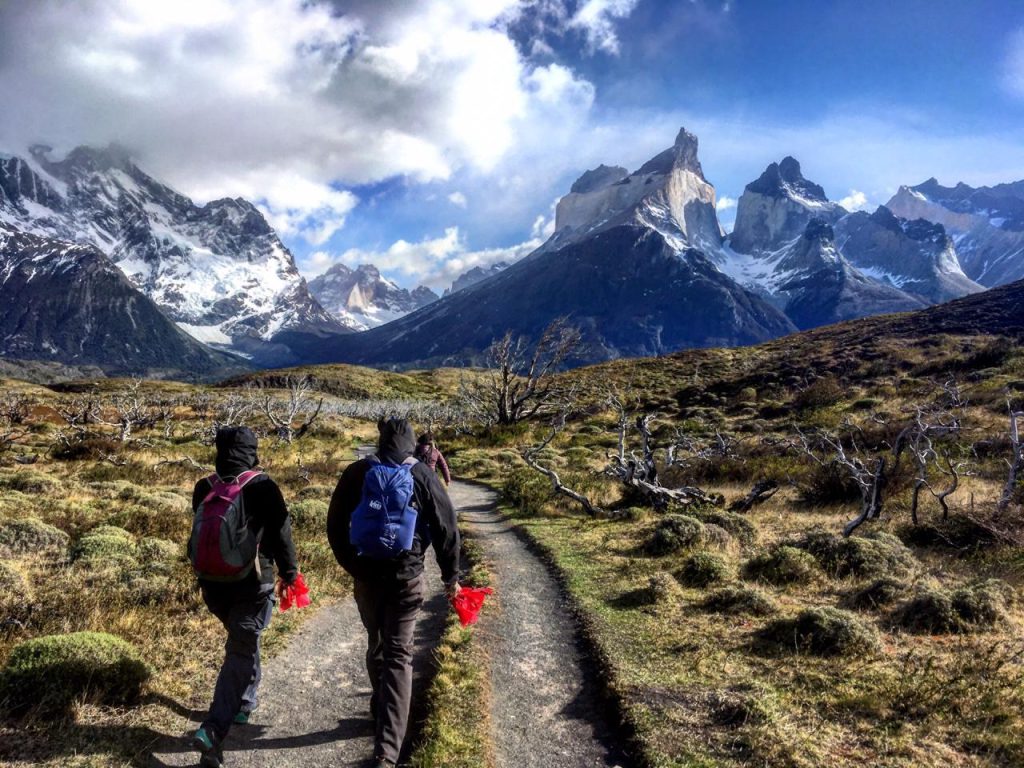
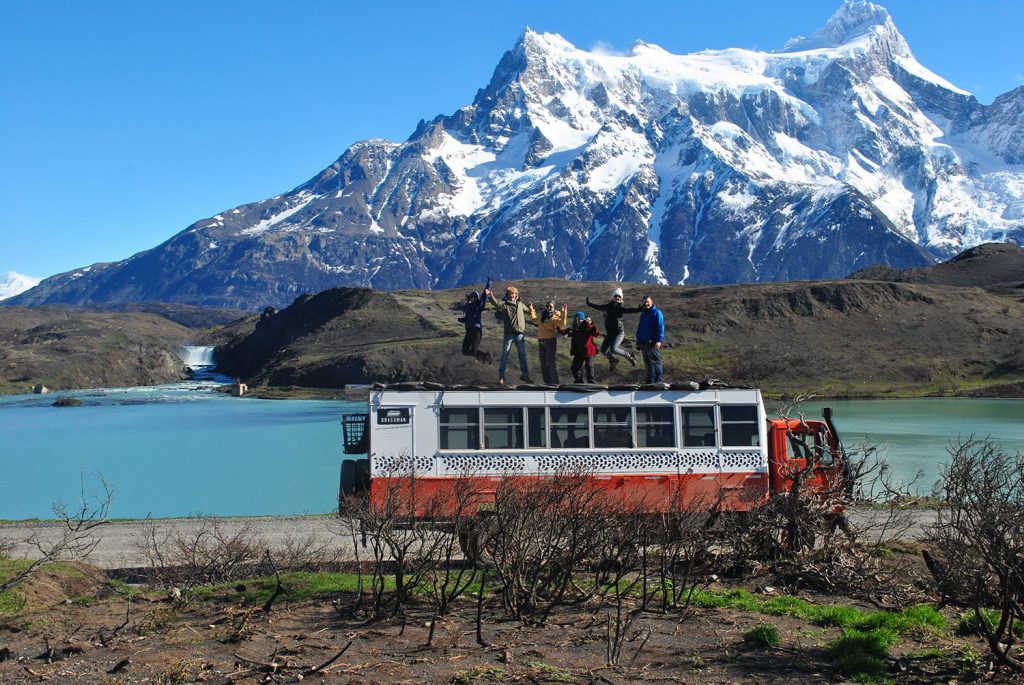
Parque Nacional Torres del Paine is home to what is undoubtedly some of the most spectacular scenery in all of Patagonia, if not all of South America. Rising up high above the Patagonian steppe are the 3 impressive granite towers that give the park it's name, surrounded by towering mountain peaks, the most famous of which are Los Cuernos and Paine Grande.  The park is a magical natural wonderland full of deep lakes, sparkling glaciers and cascading waterfalls, and it's also an important habitat for a wide variety of wildlife including the Patagonian rhea and guanaco, as well as flamingoes, condors and other birds.

The best way to explore is definitely to get out there on foot or perhaps on horse-back. The park is criss-crossed by a good network of trails, making it possible for you to see all the main sights either by doing a series of day hikes, or by doing a circular hike like the W-walk,  taking a few days and stopping off at the parks refugios or camping along the way. Horse-riding and kayaking can also be arranged locally, and boats and catamarans offer trips across Lago Grey and Lago Pehoe in season.


Day 29: Torres Del Paine National Park

Thu 03 Apr 2014

These are non-driving days. Dragoman is the first overland company to offer the opportunity to walk part of the famous ' W Walk' included in our itinerary. Today, following our local guide, you will take a ferry across Lake Pehoe and walk to Glacier Grey and back to our refugio. You will sleep at the refugio for the night. Don't forget your sleeping bags!


Day 30: Torres Del Paine National Park

Fri 04 Apr 2014

Today you will all keep trekking as far as the French Valley. If you have chosen to walk the whole of the W Walk you will stay at a refugio which would have been already pre booked for you by Dragoman with your local guide. If you are not walking the all W Walk you will make your way back to the refugio where you slept the previous night and get the last ferry (18.30) back across the lake, where the truck will be waiting for you to take you to our campsite.


Day 31: Torres Del Paine National Park

Sat 05 Apr 2014

This is a free day if you have not chosen to walk the all W Walk. You can go for a day walk around our campsite, or maybe kayaking or horse riding. If you will be walking the all W Walk you will be staying at a refugio for the night with your local guide.


Day 32: Torres Del Paine National Park

Sun 06 Apr 2014

Today is our last full day in this magic National Park.

If you have not being trekking the all W Walk, you can will hop on our truck which will take you at the base of the famous three peaks which gives the name to the park. There you will meet up with your fellow travellers who have trekked the all W Walk and walk up the Torres together. You will come back down at the truck in the afternoon and you all will go back to the campsite together.

Day 33: Magellan Straits

Mon 07 Apr 2014

500 kms drive including ferry crossing of the infamous Magellan Straits and into Argentina where we bush camp.

Border information: Exit Chile at Cerro Castillo, then enter Argentina at San Sebastian.

Activity Approximate Cost

Follow in Darwin's footsteps across the Magellan Straits

Included in tour

Magellan Straits

Separating Tierra del Fuego from mainland Argeninta are the infamous Magellan Straits. This treacherous stretch of water is about 500km long and takes it's name from the explorer Magellan who first navigated these waters in 1520. It was the only ship out of a total of 17 attempting the passage that sucessfully managed to reach the Pacific. Before the Panama Canal was built, the Straits provided a useful route between Chile, Peru and Europe, and though they are less important as a major shipping route today, they still see a fair amount of traffic.

Day 34 to 36: Ushuaia, Tierra Del Fuego

Tue 08 Apr to Thu 10 Apr 2014

A 230kms drive takes us to a 3 night stay in Ushuaia, Argentina, the southernmost town in the world. We enjoy a half day excursion to Tierra del Fuego National Park. We stay at a camp site with facilities

Activity Approximate Cost

Beagle channel boat trips

USD 40

Light plane flights over Ushuaia

USD 100

Guided tour of Tierra del Fuego National Park

Overland to the end of the world

Included in tour

Ushuaia

Ushuaia lies at the southernmost tip of the Americas, the most southerly city on the island of Tierra del Fuego and often referred to as "the city at the end of the world". The town itself is low-lying and unassuming, centred around one main street and a waterfront that overlooks the Beagle Channel. Originally Ushuaia was little more than a remote outpost, first colonised by a British-funded mission in the late 1800's and subsequently used by the Argentinian government as a penal colony. What was once a sleepy small town has grown rapidly in recent years, much of which is due to tourist development and particularly to the increasing number of Antarctica trips calling to port here.

There's plenty to do in Ushuaia and the surrounding area. The town itself is home to an interesting museum where you can learn more about the history of Ushuaia, Tierra del Fuego and the indigenous people who originally lived here. There surrounding scenery is also impressive, so it's worth getting out on a boat-trip into the Beagle Channel, which will give you some great views of town with the Martial range in the background. You can also explore Tierra del Fuego National Park, another beautiful spot with some spectacular lake and mountain scenery.

The area is famous for its biting winds, so remember to pack your thermal undies if you're heading here, whatever time of year you're going to be visiting!

Tierra Del Fuego

Tierra del Fuego ("Land of Fire") is a large island separated from mainland South America by the Magellan Straits. Most of the island belongs to Chile, but 30% of the archipelago is in Argentina, including Argentina's southernmost town, Ushuaia. This is Patagonia at its most remote,with a landscape of windswept plains, forests and swamplands, home to Rheas, Condors, Buzzard Eagles, Seals and Sealions, all of which thrive in these conditions. Originally the home of theYamana and Ona Indians, sadly there are not any indigenous communities left here. The people who inhabit Tierra del Fuego today are the descendants of the colonial settlers who came here from Europe in nineteenth and twentieth centuries, mostly from Britain, Spain and Yugoslavia.

Day 37: Magellan Straits

Fri 11 Apr 2014

We catch the ferry crossing of the infamous Magellan Straits. Then spend a day overlanding across the Patagonian steppe wildcamping. 

Border information: On the first day we exit Argentina at San Sebastian and enter Chile at San Sebastian. The same day we then exit Chile at Monte Aymond and re-enter Argentina at Monte Aymond.

Day 38: El Chalten

Sat 12 Apr 2014

We drive to El Chalten. Campsite in town will be our base for the next 3 nights.

El Chalten

The clouds that form around the summit of the surrounding mountains were mistaken for smoke, which gave the name "Chalten" which means volcano. The picturesque landscape is a perfect place for hiking, as there is so much to explore and the rewards of constant beautiful sights gives a perfect reason to hike.

Day 39 to 40: Los Glaciares National Park

Sun 13 Apr to Mon 14 Apr 2014

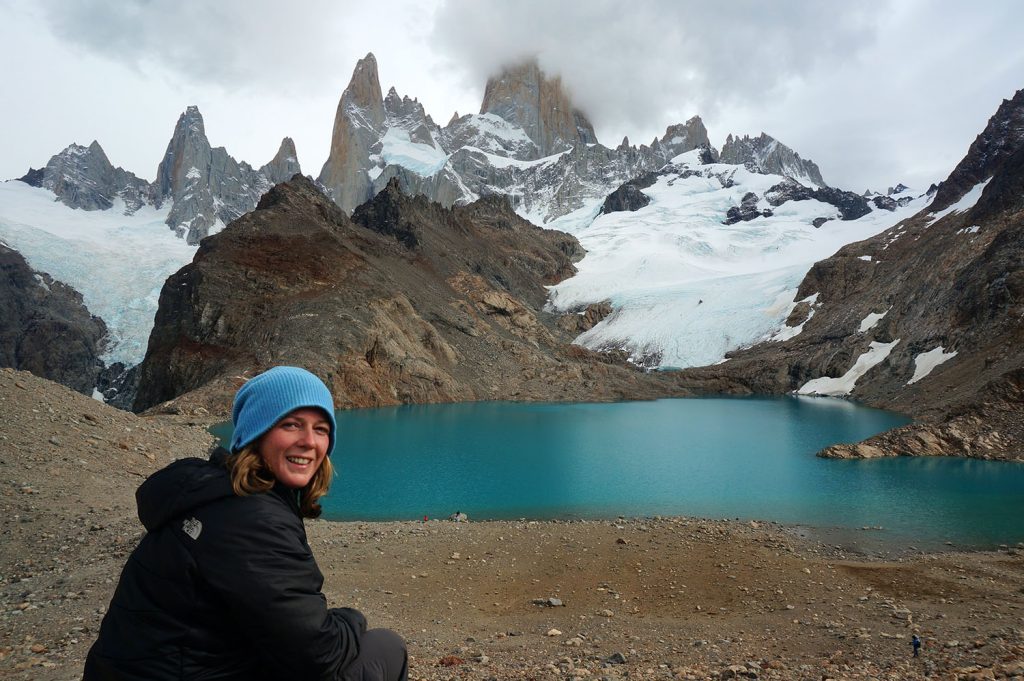
2 free days to explore the Fitzroy range in Los Glaciares NP from El Chalten. A range of activities are available from hiking, glacier trekking to horse riding. Second and third nights in same campsite with facilities

Activity Approximate Cost

Glacier trek, hikes and horseriding in Los Glaciares National Park

USD 20

Los Glaciares National Park

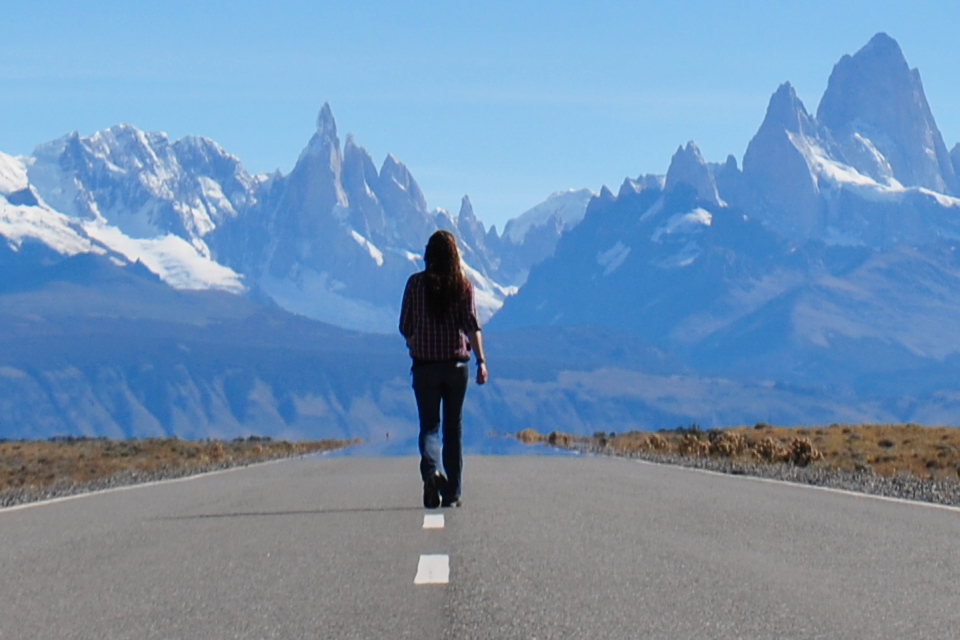
Los Glaciares National Park is probably home to some of the most spectacular scenery in all of Argentina, if not South America. This is classic picture-book Patagonia, wherever you turn you're surrounded by wide open skies, magnificent mountains, incredible glaciers, glistening lakes and thick verdant forest. By far the best way to explore is to get out on foot. There are plenty of well established trails through the park and maps can be picked up locally, so you can plan a short walk that will just take you a couple of hours, or the more adventurous might choose to hike out for a whole day or even overnight. Los Glaciares covers a massive area and there are two main gateways to the park; to the south, El Calafate provides access to Lago Argentino and the Perito Moreno Glacier and surrounding area, then in the North, the small town of El Chalten can be used as a base to explore the Fitzroy Mountains and Lake Viedma and it's glacier.


Day 41: Rio Pinturas

Tue 15 Apr 2014

Today we will sadly leave El Chalten and continue our way north. We will bush camp en route.

Day 42: Rio Pinturas

Wed 16 Apr 2014

A morning drive takes us to Rio Pinturas. In the afternoon we visit the UNESCO site Cueva de las Manos and stay at a campsite with facilities

Activity Approximate Cost

Visit the UNESCO site Cueva de las Manos at Río Pinturas

Day 43: Esquel

Thu 17 Apr 2014

Full day 650 kms drive through the Argentinean lake district to Esquel, staying at a campsite with facilities. If time allows we will go and visit a Welsh Tea house in the near village of Trevellin.

Activity Approximate Cost

Visit to traditional Welsh Tea house for afternoon cakes and tea.

USD 25

Day 44: Bariloche

Fri 18 Apr 2014

320 kms drive to the mountain resort town of Bariloche where we stay in dorm rooms in a comfortable hostel

Activity Approximate Cost

Horse riding and mountain biking around Bariloche

USD 60

Bariloche

The Argentinian resort town of Bariloche has a picture perfect setting on the shores of Nahuel Hapi Lake, flanked by the peaks of the surrounding andean mountains. The scenery here is truly stunning, so it's a must to get out and explore and take in all the amazing views. In winter, the town is a popular centre for skiing and in summer the focus shifts to walking, mountain-biking, horse-riding and kayaking and canoeing on the lakes - and if all that sounds too much like hard work, you can sit back and enjoy the view on a leisurely boat trip across to Victoria Island.

Bariloche itself is also an interesting place to wander around. The town is famous for it's handmade chocolates and there are some really spectacular displays in the local chocolate shops. Because of it's popularity with Argentinians as well as international tourists, the town has a lively bar and restaurant scene, with some great places to choose from. This is a particularly good place to sample some world class Argentinian steak, and wild boar and Patagonian lamb is also worth a try here too.

Day 45 to 46: Bariloche

Sat 19 Apr to Sun 20 Apr 2014

 2 free days in Bariloche with a range of activities available from mountain biking to horse-riding. Second and third night at hostel

Day 47: Pucon

Mon 21 Apr 2014

410 kms drive across the border and into the Lake District of Chile. Tonight we stay in Pucon at a camp site with facilities.

Border information: Exit Argentina at Mamuil Malal, enter Chile at Mamuil Malal.

Activity Approximate Cost

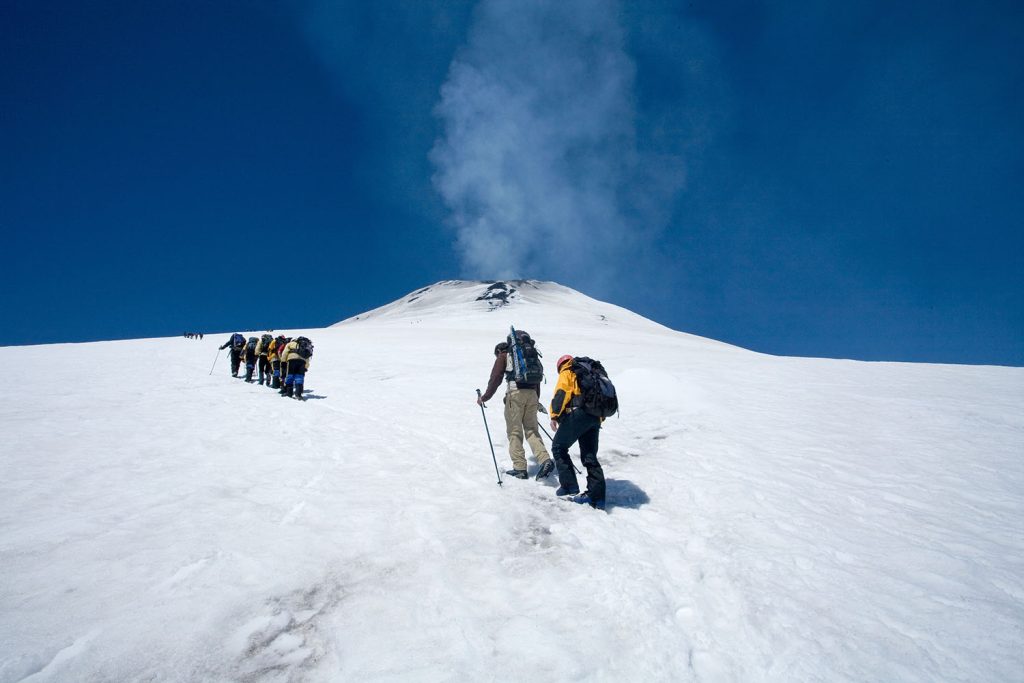
Trek up the snowcapped volcano Mt Villarica

USD 90

Horseriding, white-water rafting or hikes around Pucon

USD 40

Pucon

Southern Chile's lake district boasts some lake and mountain scenery comparable with the best the Swiss Alos or New Zealand have to offer. Beautiful deep blue lakes are flanked by majestic forest-clad mountains with snowy peaks to provide picture-postcard views, a perfect spot for walking and camping. The attractive small town of Pucon is located at the heart of the northern Chilean lakes, a great place to stop for a few days so you can explore the area and get involved in some of the many adventure activities on offer here. At certain times of year it's even possible to do a day climb of the nearby Villarrica volcano, a challenging trek, but one that anyone who is reasonably fit should be able to manage - and you're rewarded with some fantastic views of the surrounding area from the summit. Infact the whole area is great for trekking and there are plenty of options to do some great self-guided walks.

Alternatively Pucon offers great horse riding, white-water rafting and mountain-biking opportunities. And if alll this talk of activity just sounds a little too much, there are also some great thermal springs to relax in nearby, the natural pools at Pozones have a beautiful setting, a great place to go and soak your weary limbs in the evening.

Day 48 to 49: Pucon

Tue 22 Apr to Wed 23 Apr 2014

2 free days to explore Pucon and the surrounding area with a range of activities available from hiking to hot springs. Second and third nights in campsite with facilities

Day 50: Salto De Laja

Thu 24 Apr 2014

320 kms drive to the wine growing region of Salto de Laja. We stay at a campsite with facilities

Salto De Laja

Salto de Laja is a small resort town named after the four impressive arch-like waterfalls formed here by the cascading Laja river. It is easy to see the waterfalls by crossing a bridge from the main road through town, or if you have time you may be able to experience the spray from below on a river-boat trip during Chilean holiday season. Salto de Laja town is a small place, popular with Chilean tourists during the summer months, so there are lots of campsites, hotels and cabanas here. It's a pleasant place to break the journey between Santiago and Pucon, gateway to the Chilean lake district and Patagonia.


Day 51 to 52: Santiago

Fri 25 Apr to Sat 26 Apr 2014

Full day 520 kms drive to the capital, Santiago, arriving late in the afternoon. En route we will visit a vineyard for optional wine tasting. We stay the night in a good centrally located hotel allowing for optional activities the following day.

Border information: If you are leaving in Santiago, exit Chile at Santiago Airport.

Hotel for the night: Happy House Hostel

Located on the famous Moneda Street in the downtown of the city, just 15 minutes walk from the historic center of Santiago and the Government house, major museums, the Plaza de Armas, between other turist attractions. In the Brasil neighborhood, the hostel offers a warm and entertaining enviroment.It has a nice garden, a large swimming pool and a comfortable terrace.


Santiago

Bisected by the Mapocho River, Chile's capital is a large, modern city with a very European atmosphere. In the centre of the city wide tree-lined boulevards lead to pleasant plazas and leafy parks and on a clear day the snow-capped peaks of the Andes provide a magnificent backdrop to the Santiago skyline

Much of the centre is pedestrianised, which together with the wide streets and efficient metro system make Santiago an easy city to explore on foot. There are plenty of interesting museums where you can learn more about Chilean history and culture, from the City of Santiago Museum which chronicles the city’s history to the Natural History Museum and Museum of Pre-Colombian Art. The city's many wonderful parks are also worth a visit, particularly O'Higgins and San Cristobal which offers great views of the city from Cerro San Lucia.

As you would expect from a capital city of this size, Santiago is full of busy bars and restaurants and has some lively nightlife to offer. For cheap eats, full of local flavour, head to the Mercado Central (central market) which is packed full of food stalls and simple cafes and restaurants. For a real treat, you might want to head out to one of the more upmarket neighbourhoods like Bellavista or Providencia, home to some really world-class restaurants and great bars. Barrio Brasil is also worth a look, this old neighbourhood attracts an arty and bohemian crowd and there are often interesting events going on here.

If you have the time, there's also plenty to do in the area surrounding the city. Santiago is right in the middle of Chile's wine producing region, so it is relatively straightforward to arrange full day or half day tours out to the local wineries. You may also be interested in visiting the seaside town of Valapariso, which can be visited as a day trip from Santiago.

Visa Information:

Important Notes

The routes, activities and places visited described in these trip notes are intentions and are meant as a rough guide only.

We intend following the planned route but exact night stops cannot be guaranteed. It sometimes happens that we decide to make a change to our basic planned itinerary. This may be for a variety of reasons - climatic, road or bureaucratic conditions may demand it. By their very nature overland itineraries need to be flexible and the regions that we are travelling through are often unpredictable. We run adventure journeys in off the beaten track areas, often in areas without western infrastructure. You should expect that some these areas do not adhere to western safety standards.

Torres del Paine National Park and the W walk

You will spend at least 4 nights and 4 full days in the Torres del Paine National Park, allowing plenty of time for hiking, trekking and other optional activities - such as the 4 day W-walk, a popular route taking in 3 of the most famous features of the park.

The W involves 4 full days trekking and at least 3 overnight stays away from the truck - either staying in the parks Refugios (hostels) or camping along the way. When you are considering whether or not this trek is for you, it is important to bear in mind that you will have to carry all of your own equipment for the duration of the trek, e.g. clothes for 4 days, toiletries, snacks, water etc, plus a tent, food etc if camping. NB: You can hire lightweight camping equipment locally - but it is subject to availability.

You should also note that it is possible to visit nearly all of the areas of the park that the W passes through as day hikes from the main campsite where the truck will be based.


Optional W Walk with Dragoman

Many of our customers find difficult organising the W Walk on their own before hand. The Refugios in high season get filled up very quickly. For this reason for the 2013/14 season for the first time Dragoman will be including in his itinerary the first night of the W Walk as mentioned above. The local guide will be provided by Dragoman, and your kitty will include the first night at Refugio Paine Grande. Your boat across Lake Pehoe will be included, and following your local guide you will be trekking up the view point of Glacier Grey, before trekking back down at Refugio Paine Grande where you will be staying for the night. Dragoman is the only Overland company which includes this great opportunity on their trips.


The following day you will be leaving early with your local guide as far as the French Valley, where you will be leaving your guide and hike back to the ferry for the 18.30 departure back to the campsite.


But if you are interested on keep going all the way Dragoman is offering you the optional of adding the next 2 nights and give you the opportunity to complete the all W Walk. If you really want to take up this option please contact our sales team and they will be delighted to help you through the booking process.


Alternatively if you think you want to do it on your own just read on.


The W walk: suggested day plan

The day plan set out below is a suggested itinerary for walking the W based on feedback from previous passengers and crew. You can spend your first night in the park with your group and the truck - starting the trek early the next morning.

Day 1: Start point: Port Pudeto (nr Camping Pehoe) 
Night stop: Paine Grande Lodge

Get dropped off at Puerto Pudeto on Lago Pehoe and catch the Pehoe Catamaran across the lake. The first catamaran of the day usually leaves at 9am - but your leader can check the times for you on arrival in the park. The catamaran will drop you off near hostel Paine Grande Lodge, where you can drop off your bag/s if you wish, as this is where you will return to stay the night. Heading off up the winding path towards Mirador Grey to see the Grey Glacier and Lago Grey. Stop to take in the view before retracing your steps and returning to Paine Grande Lodge.
Approximate walking time: 7-10 hrs depending on speed/fitness

Day 2: Start point: Paine Grande Lodge 
Night stop: Refugio los Cuernos

You'll want to get up early to make the most of today's long trek. The day begins with a fairly easy-going 2 hrs walk from Paine Grande Lodge past Lago Skottsberg and across a rope bridge, after which you arrive at the base of Valle Frances. From here you head up the valley with its blue hanging glaciers, surrounded by towering peaks until you reach the uppermost viewpoint - where you can take in the breathtaking views of the Cuernos and Torres. You then return to the foot of the valley, from where it's a further 2 hrs walk east to your stop for the night, Refugio los Cuernos.
Approximate walking time: 8-11 hrs depending on speed/fitness

Day 3: Start point: Refugio los Cuernos
Night stop: Refugio Chileno

With shorter distances to cover today you can afford a more leisurely start, taking time to enjoy the view from the Refugio over breakfast. You then follow the "Paso de Los Cuernos" east, which takes you Lago Nordenskjold as well as a number of smaller lakes and lots of birdlife. There are a few small river crossings to navigate which involve a bit of rock hopping as there are no bridges in place. You then head north, beginning the ascent up the Rio Ascensio gorge towards the Torres del Paine lookout, stopping at Refugio Chileno for the night.
Approximate walking time: 5-6 hrs depending on speed/fitness

Day 4: Starting point: Refugio Chileno
Night stop: Re-join group & truck

It's definitely worth making another early start this morning, continuing your ascent towards the Mirador Las Torres viewpoint, initially passing through a relatively flat forested section of the trail. The final ascent involves some scrambling across scree and boulders before you arrive at the final lookout, where you'll be able to take in an awesome close-up view of the park's namesakes, the granite towers of the Torres del Paine. You then return via the same route, passing Refugio Chileno and heading further down the valley to Hosteria Las Torres - from where you can catch a minibus transfer across the Guarderia Amarga, where you will be able to arrange with your leader to meet up with the rest of your group and the truck.
Approximate walking time: 8-11 hrs depending on speed/fitness

Booking accommodation for the 'W' Walk

As mentioned above, you may choose to camp rather than stay in hostels overnight. Camping does not need to be pre-booked, but you will need to hire lightweight camping equipment to carry with you, for example tent, stove, etc. Your leader will stop off in a local town, Puerto Natales, before you enter the park where you will be able to hire any equipment you need, but you should note that availability cannot be guaranteed, particularly in high season.

If you are keen to do the W-walk we STRONGLY advise you to make reservations for your Refugio accommodation as far as possible in advance to avoid disappointment!

All of the Refugios can be booked online, so they are easy to book yourself.

You can access more detailed information and make your reservations by visiting the websites below:

Vertice Patagonia (for Paine Grande Lodge) - http://www.verticepatagonia.com/precios-y-reservas/

Fantastico Sur (for Refugio Chileno and Refugio Los Cuernos) - http://www.fantasticosur.com/en/mountain-lodges/


Multiple trucks leading in or out of Rio Carnival

On your trip from Buenos Aires to Rio (or v.v.) there will be more than one Dragoman truck doing this route due to the popularity of trips running in and out of carnival at this time of year. Because of this the trucks will operate on slightly differing itineraries however still visiting all the highlights listed. The presence of extra trucks makes for a great atmosphere leading to or from the greatest party on earth! 

Departures leading in or out of Rio Carnival

If the truck you are on has come in or out of Rio Carnival then there is likely to be more than just one truck on your specific departure date due to the popularity of trips at this time of year. Because of this the trucks are likely to operate on slightly differing itineraries however still visiting all the highlights listed. The presence of extra trucks makes for a great atmosphere leading to or from the greatest party on earth! 

Physical Preparation

Physical preparation for South America Itineraries

South America is diverse continent from high altitude, to the steamy Amazon, to baking deserts. You should therefore be prepared for the full gambit of climates. There will be time for hikking and other activities such as horse riding and you will need to be reasonably fit. Overland travel can be demanding - long, rough travel days, dusty conditions can be challenging to some. You will need to be fit enough to help every day with the camp chores (cooking, washing up, general camp set up) as well as putting up and taking down your own tent. There are some long driving days and some early morning starts. The step up into the overland vehicle, while not overly high can become tiring and you need to judge yourself to be physically fit enough to haul yourself up and down the step at least 8-10 times a day. By and large the South America trips have a good range of hotel accommodation mixed up with camping so that life is not too rough.

Note on camping kit for South America

There is a miss conception about being cheaper to buy camping equipment in South America. Every where in South America is easy to find good quality camping kit if you want to fly light, but prices are very similar to UL if not more. Please keep this in mind when you are planning your trip.

Visa Information

Most countries we visit on our travels will require visas.  Some are best obtained before you leave home and others can be obtained en-route. Whilst the ultimate responsibility for obtaining visas is yours, we will endeavour to assist you wherever possible.

The visa requirements for your trip vary depending on where you are from and where you are going. The information provided is given in good faith and we do try to keep the visa information as up to date as possible.  Please be aware though that rules do change, often without prior warning, which is why it is important that you check for yourself.

For visas that are needed in advance you can choose to submit the applications directly to the relevant embassy /consulate.  However our recommendation is that you use a visa agent to assist you with your applications. While this does increase the cost it will make the process much easier for you. Dragoman have teamed up with ‘The Visa Machine’ to create a safe, secure, hassle-free way of obtaining visas and visa advice. Our unique link within their website is designed to make the visa process as straightforward as possible.  Simply go to https://dragoman.thevisamachine.com and click on your region of travel followed by your trip route and ‘The Visa Machine’ will advise you about not only the required visas but also the dates by which you should apply.  ‘The Visa Machine’ can then assist you in the actual visa application thus taking all the worry and hassle out of the process.  This should apply for ALL nationalities and countries of residence.

As you will need to submit your passport together with your applications, we recommend that you avoid making any travel plans in the weeks leading up to your departure. However if you do need to travel in this period please let us know as soon as possible so that we can help you work out the options for your visa application process. 

Chile

Nationals of most countries including Australia, USA, the EU, Canada, Japan, New Zealand, South Africa, Switzerland, Turkey and the UK do not need a visa for tourist visits of limited duration to Chile

Argentina

Nationals of most countries including Australia, USA, the EU, Canada, Japan, New Zealand, South Africa, Switzerland, Turkey and the UK do not need a visa for tourist visits of limited duration to Argentina.

The Argentine government has recently introduced a reciprocity tax which applies to Canadian, US and Australian citizens. The amounts are as follows:

ARGENTINA RECIPROCITY TAX:

The Argentine government charges a reciprocity tax which applied to Canadian, US and Australian citizens. The amounts are as follows:

Australians - US$ 100 (multiple entry for up to 1 year from date of issue)

Canadians - US$75 (single entry) or US$ 150 (multiple entry for up to 5 years from date of issue)

Americans - US$40 (multiple entry for up to 10 years from date of issue)


 Fee can be paid on line through the following websites:: www.migraciones.gov.ar orwww.provinciapagos.com.ar. For instructions on how to process this payment, please visithttp://cnyor.mrecic.gov.ar/userfiles/Online_payment_instructions_0.pdf


IMPORTANT: Up to June 2013 computers will be made available at Ezeiza International Airport and  Jorge Newbery Airport (Aeroparque) to facilitate this online payment to travellers who fail to make this payment prior to arrival. We expect this will potentially cause long delays to those travellers so we strongly advise to pay this fee before arriving to Argentina. 

Brazil

Nationals of the EU, New Zealand, South Africa, Turkey, Switzerland and the UK do not need a visa for tourist visits of limited duration.

Nationals of Australia, Canada, Japan, Mexico, Russia, South Korea and the USA need a visa to enter Brazil. This visa must be obtained before entering Brazil.

If your nationality was not included in the above mentioned group, please contact your nearest embassy to find out your visa requirements.

Flying to Central or South America via the USA

If your flight to central or South America is via the USA then you MUST obtain an Electronic System for Travel Authorization (ESTA) before travel.

An ESTA can be obtained online via the following link and paying the appropriatefee - https://esta.cbp.dhs.gov/esta/

Personal Spending

Based on the range that previous travellers have spent on trips in South America, we recommend you allow between a minimum of US$15 and a maximum of US$30 per day. This amount is usually lower in countries such as Bolivia, Ecuador and Peru but slightly higher elsewhere. 

This will covers expenses such as your drinks, meals whilst out and also when staying in hotels, souvenirs, tips and personal permits.


What else you need to know

Currencies & Cash

It is not really worth trying to buy local currencies before you travel. Bear in mind that many countries have strict regulations about the amount of their own local currency you are allowed to import - if you are found with amounts in excess of the allowed amounts, it may well be confiscated!

For obvious security reasons we hesitate to recommend you bring lots of cash with you, a sensible mix of cash and ATM cards is best. Most of our past passengers have said they wished they had been told to bring more cash. Apart from the convenience of being able to change money in many more places, you will sometimes get a much better exchange rate for cash.

More and more people are choosing to travel with cash passports such as TravelEx cards (you can visit www.cashpassport.com for further information on these).  This is a very secure way of carrying your money whilst travelling.  You treat them exactly like an ATM card and draw out local currency from an ATM within each country.

Travellers cheques have become increasingly difficult to change in South America with passengers and our leaders experiencing huge frustration and numerous hours spent trying to find a bank which will change travellers cheques. For this reason we no longer accept them on our trips.

You should take a mixture of denomination notes. However due to a recent counterfeit scam central banks in several South American countries (Ecuador, Peru, Bolivia and Chile) have temporarily banned the circulation of $100 notes bearing a series 2001 production date and a serial number starting with the letters CB or CF and ending in B2. The serial number is printed in green on the emblem. Banks and moneychangers in most countries will now only accept bills with a metallic strip running top to bottom of the bill and which are dated from 2003 or later. You should not take worn or damaged notes, or any that have been written on. Cash machines are readily available in most areas but are not always reliable therefore we recommend that you do not rely on them as your only source of cash. Credit cards such as Visa, MasterCard and American Express are the most commonly accepted, but be prepared for very high commission charges. Please do not rely on cards for daily use, as they are not always accepted outside of larger towns and cities. If you are taking traveller's cheques, we recommend that you should only take those issued by American Express. Please note that Thomas Cook traveller's cheques may be used in some places, but are becoming more difficult to change. Brazil can be difficult for changing forex, it’s handy to have a cash card as backup. Please bring a mixture of small and large denominations as in more remote areas it can be hard to change amounts over $50. Kitty contributions should be at least half in cash and be in the same denominations and currencies as suggested above. Any proportion of kitty contributions paid in travellers cheques should be increased to cover the commission charge incurred in exchanging them.

Pre and post trip accommodation and connecting flights

At Dragoman we believe you should make the most of the places you visit, so if you would like to see more of your joining or finishing point cities, why not book additional accommodation to extend your stay. Dragoman can take away the hassle of time zones and language barriers by making the booking for you. This accommodation is only available at the joining or finishing city of your trip, immediately before or after the trip you are travelling on. 

While Dragoman is happy to assist with booking your pre and post trip accommodation, it is important that you understand you may be able to book your own room at a cheaper rate directly through the hotel or on the internet.  Our additional accommodation prices are based on the hotel’s rate plus an administration fee. Please note our rates do not reflect last minute walk in rates or internet specials.

We can also book arrival airport transfers for you as long as we have your flight arrival details.  These are normally payable in cash upon arrival, however we do have pre paid transfers in a few destinations. 

Please contact our reservations team for details of the accommodation and transfers that we can offer as not all hotels offer this service.

Accommodation on tour

Dragoman overland trips are designed for shared accommodation, whether camping or staying in hotels and therefore do not involve a single supplement. Single travellers will share with people of the same sex for the duration of the trip, in accommodation ranging from twin to multi-share. The type and variety of accommodation is determined by conditions on each of our routes. The campsites will range from rather basic to those with excellent facilities, including swimming pools, restaurants and bars. In some cases it may also be possible to upgrade locally to bungalows, lodges or even tree-houses. One of the highlights of overlanding is that in more remote areas we will wild camp. This allows us to get far away from the tourist crowds to some beautiful, secluded spots. We will also arrange as many village or local homestays as possible, allowing us to get close to indigenous populations and ensures our money stays within local communities. 

Group size?

The maximum group size we take on our overland journeys ranges from 19 to 22 depending on the geographical location, however the average number of passengers is more likely to be around 16. 

Please note that there is an overlap of 2 trips in Zanzibar. This means a group starting a trip in Nairobi for example will visit Zanzibar at the same time as groups starting their trips in Dar es Salaam. In practical terms this means there could be up to 44 group members in Zanzibar at the same time.

Who travels with Dragoman?

Our passengers come from around the world and are always an interesting mix of nationalities and ages. On average there is a pretty even split, males to females and between solo travellers, couples and small groups of friends. We believe that overlanding should be open to as many people as possible and so although we have a minimum age limit of 18, as long as you are fit, healthy and passionate about travel, we are happy to take you, whatever your age is. One of the beauties of group travel is the camaraderie and friendships that are formed along the way and as well as the variety of people that you will meet.

Our Community

At any time before or after you book you can join our community - Dragoland. This is a great place to ask questions before you travel and catch up with your fellow travellers once your trip has finished. You can share photos, videos and stories You can also download a selection of free travel apps. See the home page to sign in, it's free and easy.

We also have a Facebook page where travellers regularly swap info with each other - you can join here

Our crew and guides

Our crew are passionate about travel and always up for adventure. It takes someone special to become a Dragoman leader. Our crew undergo the most intensive training program of all overland companies, spending 10 weeks learning the ropes at our base in Suffolk, UK and then up to six months on the road as a trainee. On all Dragoman overlanding trips two western crew who are responsible for the group and the overall organisation will accompany you. While not being guides in the traditional sense you can expect them to have a broad knowledge of the places visited and to offer suggestions of things to do and see. In East and Southern Africa we will also have an African camp master/cook who is in charge of running the camp and organising all of the meals. Their knowledge of the local produce makes shopping at the markets great fun and you will learn how to prepare and cook some unusual dishes. In the rest of Africa, South America and the majority of Central Asia and China we use local guides who may stay with us for just a few hours or will actually travel with us for some or all of the journey. In these cases they become a third crew member and are able to offer their local knowledge as well as a real insight into the lives of the local people.

(If travelling in East & Southern Africa, also please see the note about our code-share crew)

Your tour leader has a duty of care to all of their passengers and therefore they have the authority to ask passengers to leave the trip if they require medical assistance, are behaving in an anti-social manner or refuse to comply with local laws and customs. In all matters relating to the trip, the leader's decision will be final and we appreciate your respect of this.

Medical conditions

We ask all of our passengers to declare any pre-existing medical conditions and in some cases you will be asked to complete one of our medical questionnaires. For trips that travel to areas of high altitude we also require all passengers to complete an altitude questionnaire. The ratings for each trip are a good indication of how challenging they are and in some cases passengers should be prepared for some long driving days and possible limited facilities. We are always happy to give extra advice if you have additional concerns.

Vaccinations

Recommended vaccinations and other health protection measures vary according to region and recent bulletins issued by health authorities. It is essential to get the latest advice on the region(s) you are planning to travel in. It is essential that you check with either your doctor or a travel clinic in good time before you travel.

In the UK we have been working with Nomad Travel for many years and their website has comprehensive, up to date vaccination and health information. Dragoman customers will receive a 10% discount off all vaccinations given at Nomad Travel clinics.

A  good source of up to date information is the World Health Organisation - http://www.who.int/en/

Malaria

Get expert advice before travelling about types of malaria pills and take them as instructed. Recommended types do change from time to time and from area to area. Consult your vaccination centre for the most up-to-date requirements

The mosquito usually bites between the hours of dusk and dawn and so covering up by wear long-legged and long-sleeved clothing, preferably light coloured and buttoned at the wrists can help. Do not sleep without closing windows, tent doors or, if sleeping out, use a mosquito net. Wear repellent applied directly to the skin or soaked into clothing.

Treating clothes and mosquito nets with a Permetherin solution provides significant protection. It should be available at most travel stores.  Mosquito coils are useful on still nights, in hotel rooms but cannot be used inside the tents.

Meals and group participation

On an overland journey you are more than just a passenger, you’re part of the crew, pitching in to set up camp, shop for food, cook and generally help out. We operate a rota system, dividing the group into smaller units of 5 or 6 people, so that these duties are shared equally amongst the group. These jobs will include things like collecting water and firewood, loading the back locker, supervising the kitty and food stores etc. While camping on overland journeys, all meals will be included in the kitty and this means that you will be working as a group to prepare meals and cook for your group. (On trips south of Nairobi we have a cook on board the truck, however you will still be required to help prepare meals). If you have any dietary requirements please tell us at the time of booking and also remind your crew at your welcome meeting. A typical camp breakfast might be toast with spreads, cereal and something hot such as eggs or pancakes as well as tea and coffee. Lunch is almost always a sandwich heaped high with healthy salad and assorted fillings, with fruit to follow. Dinner might be a BBQ, risotto, pasta dish and there is always the chance to try some local cooking. Generally our passengers find the more they put into a trip, the more they benefit from it.

Responsible tourism & code of conduct

Dragoman is committed to ensuring that we have a positive impact on local communities and that we implement policies to minimise any negative impact on the local environment. We are dedicated to making sure that we adopt a responsible attitude to the areas through which we travel and believe that our trips should benefit the local people and their environment. Dragoman recognises that we are guests of local communities and strive to make these communities our partners, so that they benefit directly from our visit.

You can find full details of Dragoman’s responsible tourism policy linked from the home page. All passengers are required to obey all laws of the countries through which we pass. This particularly applies to the smuggling of contraband and possession of narcotic drugs, firearms, antiquities and ivory. Any passenger found contravening such laws or customs may be required to leave the trip immediately with no refund of the trip price.

Overland travel and security

One of the real advantages of overland travel is that the vehicle provides a very real level of security when travelling. There is no doubt that a properly equipped overland vehicle, with safes, fully lockable doors and windows is an obvious advantage when travelling in much of the world. We recommend the use of a neck wallet or money belt whilst travelling for the safe-keeping of your passport, air tickets, cash and other valuable items (although most of these can be locked in the safe whilst you are on the trip) and advise passengers to leave any valuable jewellery, watches etc at home. Generally speaking, you will not be travelling on local public transport and will have the added security of travelling in a group with experienced crew on hand to offer advice.

Please note: Any personal effects that are left on the truck, even if they are stored in the safe, are left at your own risk and Dragoman cannot be held responsible for any damage or theft that may occur.

The safety of our passengers, leaders and operators is a major priority of Dragoman. With this in mind we monitor world events very closely. By the very nature of the adventure travel that we take, there are risks and hazards that are inherent in our itineraries. Dragoman makes operational decisions based on informed advice from a number of sources:

The British Foreign and Commonwealth Office travel advice

Reports from other travel companies and local suppliers

Leaders reports from off the road

Local contacts we have built up over 29 years of experience

Many national governments provide a regularly updated advice service on safety issues involved with international travel. You should always make yourself aware of the travel advice before you book and again before you travel. Below are links to some of the websites

Britain. http://www.fco.gov.uk/en/travelling-and-living-overseas/travel-advice-by-country

Australia. http://www.smartraveller.gov.au/

New Zealand. http://www.safetravel.govt.nz/

United States. http://travel.state.gov/travel/travel_1744.html

Canada. http://www.voyage.gc.ca/countries_pays/menu-eng.asp

Dragoman has comprehensive passenger liability protection and tour operator insurance. These policies have total indemnities of £3,000,000 and £10,000,000 respectively. This is in addition to local vehicle insurance and your personal travel insurance.

Emergency contact

We have a dedicated 24 hour telephone number which should only be used once you have left the UK and in the event of a real emergency. Should you need to call the number, we will do what we can to help but please bear in mind that real progress or action may not be possible until normal office hours.

If your flight is delayed or cancelled, please let us know and then make your way to the joining hotel as instructed in theses trip notes. If you cannot get through leave a message and a contact number as these will be regularly checked and the crew informed if necessary.

Emergency Number: +44 (0) 7985106564.

Insurance

It is a condition of booking that you have comprehensive travel insurance. Without evidence of valid travel insurance you will not be allowed to start the trip.

Whatever policy you choose, you must ensure that it is designed for adventure/overland travel. As such it must cover you for adventure activities such as white water rafting, trekking, horse-riding and that the 24 Hour Emergency Assistance Company must be experienced in handling situations in developing countries – for example they have the ability to arrange repatriation from remote areas such as the Sahara or if you were trekking in the Andes. Please double check if you have annual travel and/or credit card policies to ensure they have the cover you require, as many of these policies are not able to cope with adventure travel to remote areas. We recommend that any policy has the following minimum levels of cover: Medical (incl. repatriation) £5,000,000 Personal Liability £5,000,000 Cancellation and Curtailment £5,000 Loss of Baggage, personal effects, money and other inclusions are down to personal choice.

Issues on the trip

While we always endeavour to provide the best possible holiday experience, due to the nature of travel and the areas we visit sometimes things can and do go wrong. Should any issue occur while you are on your trip it is imperative that you discuss this with your group leader or our local partner straight away so that they can do their best to rectify the problem and save any potential negative impact on the rest of your trip.

We recognise that there may be times when your group leader may not be able to resolve a situation to your satisfaction. If this is the case please contact our customer relations department on customer_relations@dragoman.co.uk. You may also choose to provide details in your feedback questionnaire which we ask you to complete at the end of your trip but we do ask you to be aware that it is very difficult for us to provide any practical help after the trip is complete.

Passports

Check that your passport will still be valid for 6 months after the end of the trip - this is important as some countries WILL refuse entry to anyone whose passport is due to expire. A temporary or "visitor's” passport is not valid on our trips. You will need to provide us with your passport details prior to departing for you trip. If you change your passport please remember to inform us.

Luggage & Kit List

Although you will not have to carry your main bag long distances you will need to help load and unload them onto the truck. For this reason we recommend that you use a backpack or soft bag rather than a heavy suitcase. During your trip your main luggage will be kept in the back locker so you will also need a small daypack. This can be used to carry your camera, water bottle and other personal effects for daily use.

The size of baggage that can be brought on this tour is limited by the locker space on the truck. Different trucks have different-sized lockers however to be safe we recommend that your bag be no larger than 66cm deep, 30cm wide, and 30cm high. The weight limit for luggage on all trucks is maximum 20kg.  Backpacks should not have an external frame unless it can be easily removed and stored separately to avoid damaging other people's luggage.

Your clothes and equipment should be appropriate for the conditions you are travelling in. On overland trips Dragoman will provide all camping equipment apart from sleeping bags and ground mats (except on routes between Nairobi and Cape Town where ground mats are provided).

The clothes and equipment should be appropriate for the conditions you are travelling in, which will vary depending on which part of the world you're heading to. On overland trips Dragoman will provide all camping equipment apart from sleeping bags and ground mats*, so you'll need to bring those with you. Think about the climate and altitude of the areas you'll be travelling to, there's nothing worse than being cold at night so it's worth investing in a decent sleeping bag if it's likely to get cold. And remember even when it's warm during the day, it can often get cold at night, particularly in desert regions.

*Ground mats are provided on our non "in-depth" overland trips that run in South and East Africa, between Nairobi and Cape Town.

For a general idea of what you need this list provides a guide:

For a comprehensive kit lists take a look at the Dragoman kit list that Nomad Travel have created.  Dragoman customers will receive a 10% discount on all equipment purchased either online or in store. Click to see the kit lists www.nomadtravel.co.uk/kitlist/overlanders-kit-list

Water

The sale of bottled water contributes to an enormous environmental problem around the world. In addition to the water in bottles, the production of a 1 litre plastic bottle takes 2 liters of water and 200ml of oil. A large proportion end up in limited landfill or discarded in waterways and natural environments.

Please avoid the purchase of bottled water by using the chemically sterilized water stored in the purpose built storage tank or in water jerry cans in your Overland vehicle. You are free to refill your bottle as many times a day as you like. You are helping the environment and your hip pocket!

Personal medical kit

All of our trucks have a fully stocked medical kit onboard for use in emergency situations only.  Therefore in addition to this we recommend that you purchase your own personal medical kit. In the UK we have teamed up with Nomad Travel Stores and Clinics to produce the Dragoman Travel Medical Kit. It has been designed in conjunction with the truck kits  and contains everything you would need for any minor accidents. For more details please visit their website:

nomadtravel.co.uk/catalog/view/dragoman-medical-kit

Electrical equipment

Your vehicle will be equipped with a 12 volt socket so to charge your iPod, MP3 player, camera, laptop and mobile phone you will need a DC 12 volt adapter - the type that can be used from a cigarette lighter in your car. Please be aware that only one piece of equipment can be charged at a time and it will not be allowed if there is a risk of running the vehicle’s batteries low. Batteries may also be recharged from hotel room wall sockets and the majority of the campsites we stay at have electricity points so please bring along your normal charging adapters as well. You will need to ensure that you have the correct country adaptor for your specific charger.

The kitty

The Kitty is a group fund paid separately from the trip price at the start of your trip which covers all things that the whole group does, such as:

It is an amount that each passenger puts into a central fund and is monitored by the Dragoman crew. It’s payable in full at the start of your trip, and in instalments at the start of each individual trip on combination trips

The kitty system is very unique to over landing as it allows us to have flexibility on the road. You can see exactly how your money is being spent and ensure that you are getting the best value by buying locally.

The kitty advertised in the brochure is an estimate at the time of printing. Local inflation and costs vary throughout the year and so we review kitties on a monthly basis. Once you book your trip it is very important that you check our website on a regular basis and just before departure for any changes to the kitty amount.

Your kitty can be paid in a mixture of US Dollar cash and local currency and most of our travellers choose to bring a cash passport with them for withdrawing local currency (you can visit www.cashpassport.com for further information on these). This is a very secure way of carrying your money whilst travelling. You treat them exactly like an ATM card and draw out local currency from an ATM to give to your leader within each country.

Travellers cheques have become increasingly difficult to change around the world with passengers and our leaders experiencing huge frustration and numerous hours spent trying to find a bank which will change travellers cheques. For this reason we no longer accept them on our trips.

Continuing your trip

Having an amazing trip and met a great group of people? Having too much fun to go home yet?  If on your trip you decide you would like to continue, then why not speak to your trip leader who can advise you of the cost and availability of continuing your journey.

Contingency emergency fund

Sometimes, civil or political unrest, or reasons beyond Dragoman's control (e.g. a natural disaster), can mean that an itinerary is disrupted and we have to make a contingency plan. This may involve hiring alternate transport or even the whole group flying over an area. Although Dragoman will help organise travel arrangements, in circumstances outside Dragoman's control you should be prepared to contribute towards the costs and therefore we ask you to bring along a 'Contingency Fund' of USD400. In almost all cases trips run smoothly and this fund is therefore never used. We also recommend that you take along an internationally recognised credit or charge card with a decent limit in case of emergencies, such as medical treatment en route, or even the need to be repatriated; though these occurrences are rare. Remember that travel insurance policies usually only refund you for expenses after you have already paid out.

Tipping

Tipping is entirely voluntary. The Dragoman crew may be travelling with you for many weeks and usually they become good friends with most members of the group. It is sometimes easy to forget that they do work hard to ensure that you do have a great trip. If you feel you would like to tip them, they certainly would appreciate it. On a number of our trips, we also use a local guide as well as our own Dragoman crew. These guides live and travel with you through their home country and it is usual to tip them when they leave. We recommend USD10 to USD15 per person.